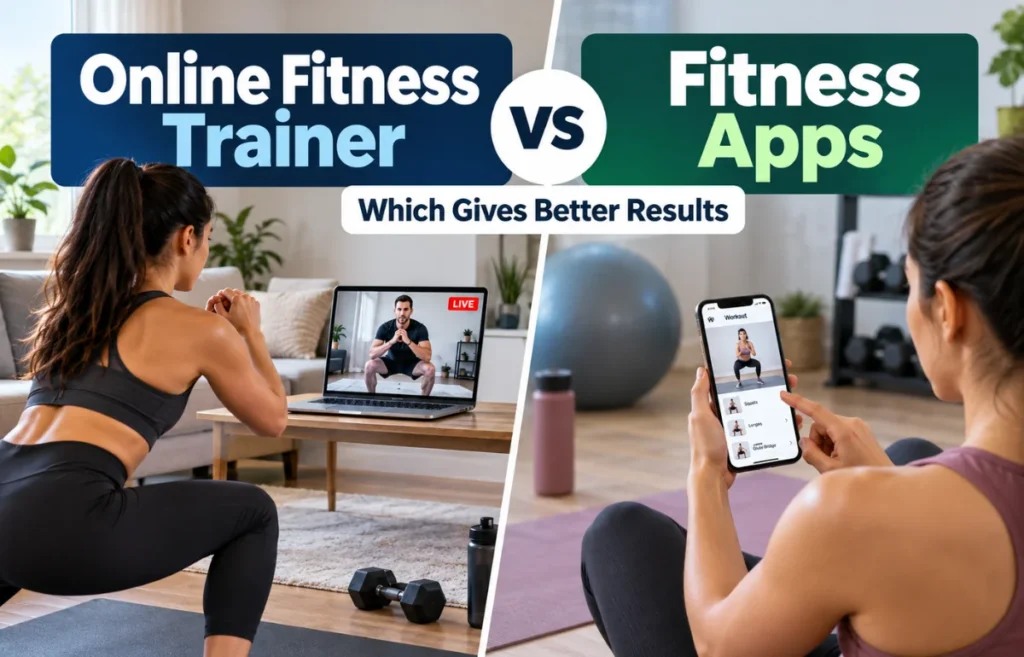
Fitness apps have exploded in popularity. They are cheap, convenient and packed with workouts. Yet many people who download them stop using them within a few weeks. Remote coaching with a real human offers a different experience. So which one actually delivers better results? The answer depends on your goals, your motivation and how much guidance you need.
Apps are excellent for people who already know how to train and simply want structure. They offer large exercise libraries, timers, progress logs and pre-built programs. Many cost less than a single in-person session per month. If you are self-motivated and confident with your technique, an app can be a solid tool.
The limitation is that apps are built for the average user. They cannot see how your knees track during a squat, notice when your lower back rounds on a deadlift or change your plan because your shoulder feels sore this week.
What a Human Coach Adds
A virtual personal trainer works with you as an individual. They start by learning about your history, injuries, schedule and goals, then design a program around them. During live video sessions or through recorded form checks, they correct technique in real time, which helps you train safely and get more from every rep.
Perhaps most importantly, a coach provides accountability. Knowing that someone is expecting you at a set time, and will notice if you skip, is one of the strongest predictors of consistency. Consistency, not the perfect program, is what produces results.
Results for Specific Groups
For beginners, a coach helps build good habits and correct movement patterns from day one. For older adults, personalised guidance is even more valuable. Balance, joint health and existing medical conditions all need careful attention, which is why many families look for a personal trainer for seniors rather than relying on generic app workouts.
People returning from injury, managing chronic pain or training for a specific event also benefit from a plan that adapts week to week, something an algorithm struggles to do well.
Cost and Convenience
Apps win on price. However, remote coaching is far more affordable than traditional in-person training and still offers the expertise and accountability apps lack. Both options let you train at home on your own schedule, so convenience is roughly equal.
Which Should You Choose?
If you are experienced, disciplined and on a tight budget, an app may be enough. If you want faster progress, safer technique and someone in your corner when motivation dips, a human coach is the better investment. Many people find the sweet spot is using a coach for programming and feedback, with an app simply for logging workouts.
The Bottom Line
Technology is a helpful tool, but people still change people. For lasting results, real feedback and genuine accountability, a qualified coach consistently outperforms an app on its own.
Marcus Hale is a Fitness and Exercise Content Researcher at Wellbeing Junction with 6+ years of experience researching and writing about strength training, mobility, cardiovascular fitness, recovery, workout planning, and sustainable exercise habits. He focuses on creating practical, evidence-informed content that helps readers understand exercise principles and build safer, more consistent fitness routines.
Marcus Hale is a Fitness and Exercise Content Researcher at Wellbeing Junction with 6+ years of experience researching and writing about strength training, mobility, cardiovascular fitness, recovery, workout planning, and sustainable exercise habits. He focuses on creating practical, evidence-informed content that helps readers understand exercise principles and build safer, more consistent fitness routines.