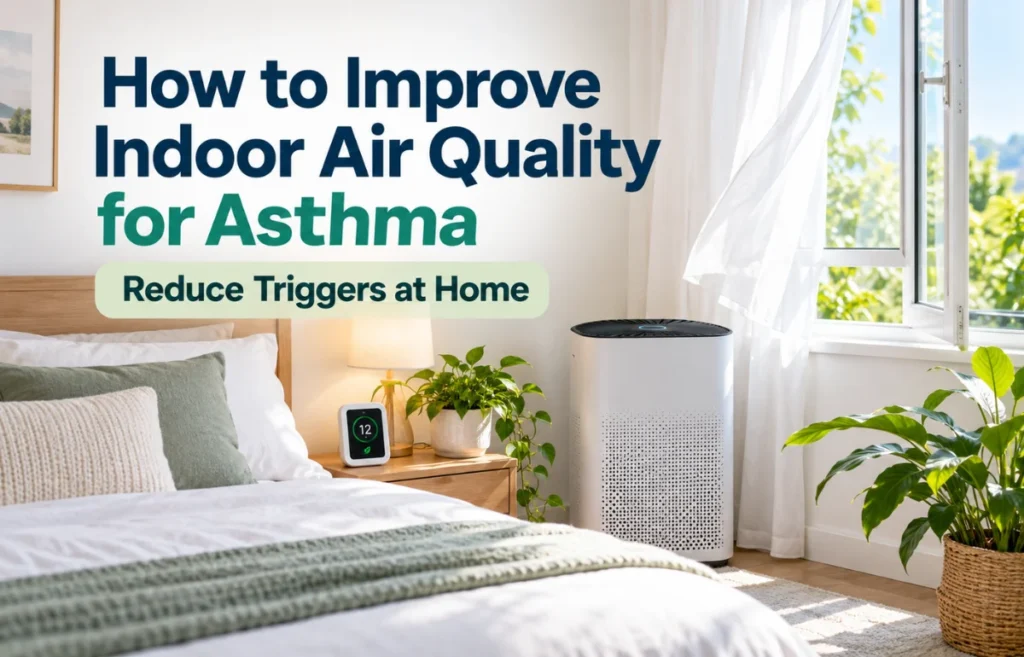
Indoor air quality describes how clean, healthy, or polluted the air is inside a home or other building. Asthma is a chronic lung condition in which sensitive airways can become inflamed and narrow, making breathing more difficult. The connection between indoor air quality and asthma matters because pollutants and allergens inside a home—including smoke, dust mites, mold, pet dander, pollen, and fine particles—can trigger symptoms in some people with asthma.
Learning how to improve indoor air quality for asthma therefore means doing more than simply making a room smell fresh. The goal is to reduce the specific airborne particles, allergens, moisture problems, and irritants that affect the person living there.
I find it useful to think about indoor air in three parts: what is producing the trigger, how it is reaching the person, and what can realistically be changed. That approach usually leads to better decisions than buying a device first and looking for the pollution source later.
Why Indoor Air Quality Matters When You Have Asthma
People often think of air pollution as something that exists outdoors beside highways, factories, or wildfire smoke. Indoor air can contain its own mixture of particles, gases, biological allergens, and pollutants carried in from outside.
For someone with asthma, that mixture matters because triggers are highly individual. A cat may cause symptoms in one person but not another. Someone else may be especially sensitive to dust mites, mold, smoke, fragrances, pollen, or air pollution.
The CDC advises people with asthma to identify their own asthma triggers and reduce exposure where possible. Common indoor concerns include secondhand smoke, dust mites, pests, pet allergens, mold, chemical fragrances, and outdoor air pollution that makes its way indoors.
That individual variation is why I would not approach indoor air quality and asthma with a single universal checklist. The most effective home changes are usually the ones aimed at the triggers that are actually present.
Start With the Source, Not the Air
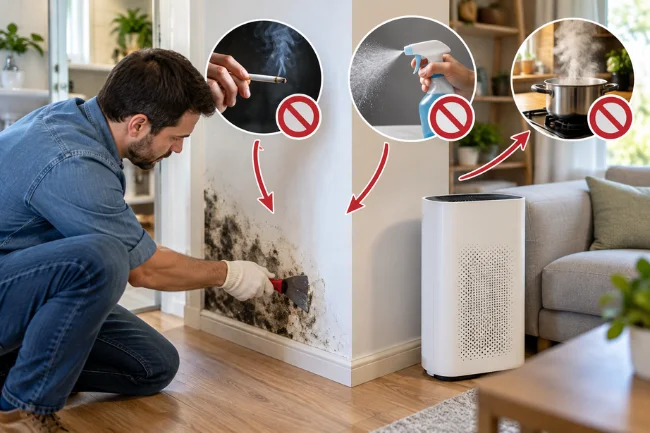
One of the most useful principles in indoor-air management is source control.
If something is continuously releasing pollution into a room, filtering the air without addressing the source can become an endless cleanup job. A purifier may capture part of what becomes airborne, but it cannot repair a leaking pipe, stop someone from smoking indoors, remove a moldy carpet, or prevent a strong cleaning spray from being released.
I use a simple rule:
Source first, pathway second, filtration third.
For example, if mold is growing because of a bathroom leak, the first job is to fix the leak and deal with the mold. Ventilation can then help remove moisture, while filtration may help reduce some remaining airborne particles.
The EPA similarly treats source control, ventilation, and air cleaning as complementary strategies rather than substitutes for one another.
A Practical Indoor-Air Priority Table
The lesson behind the table is simple: cleaning the air works best when you are no longer continuously adding the same pollutant.
Keep Indoor Humidity in a Healthy Range
Humidity is one of the most overlooked links between indoor air quality and asthma.
Too much moisture can support mold growth and create conditions favorable to dust mites. Very dry air, meanwhile, can feel irritating to some people, even though simply adding humidity is not always the right solution.
The CDC recommends keeping indoor relative humidity around 30% to 50% for asthma-trigger control and keeping it below 50% when mold is a concern.
A small digital hygrometer is useful because humidity is difficult to judge accurately by feel.
If humidity regularly exceeds 50%, I would look for the cause before automatically running a dehumidifier all day. Common causes include:
- bathroom moisture without adequate exhaust
- clothes dryers that are not properly vented outdoors
- plumbing leaks
- damp basements
- roof or window leaks
- poor kitchen ventilation
- groundwater or drainage problems
Fixing the moisture source generally gives a more lasting result than treating the symptom.
Deal With Mold Quickly
Mold deserves special attention because filtration cannot solve an active moisture problem.
Mold grows where moisture is available, particularly around leaks, condensation, damp bathrooms, basements, and previously water-damaged materials. Breathing mold can trigger asthma symptoms in susceptible people, and the CDC recommends correcting moisture problems as part of asthma trigger control.
If something becomes wet, drying it promptly matters. The CDC recommends drying damp or wet materials within roughly 24 to 48 hours where possible to discourage mold growth.
Recurring mold should make you ask a different question: not “How do I clean this again?” but “Where is the moisture coming from?”
That shift in thinking often prevents the problem from returning.
Reduce Dust Mites Where You Sleep
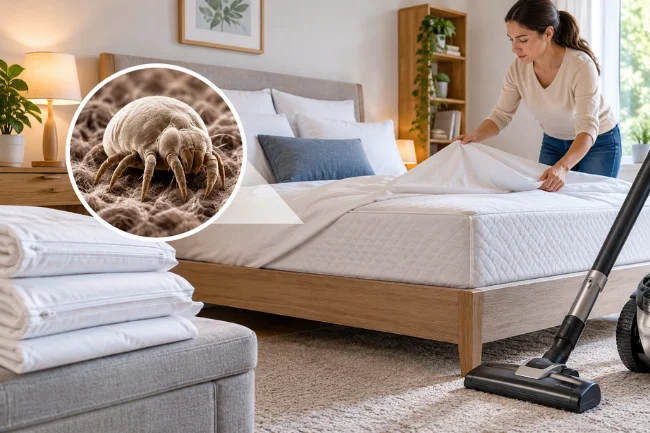
The bedroom deserves disproportionate attention when managing asthma triggers because people spend many hours there.
Dust mites are microscopic organisms that commonly live in bedding, mattresses, carpets, and upholstered materials. Their allergens can trigger asthma in sensitive individuals.
Useful measures include washing bedding regularly, using allergen-resistant mattress and pillow covers when appropriate, controlling humidity, and vacuuming with effective filtration.
Current NHLBI guidance is especially useful here because it discourages relying on one isolated measure for every person. For someone who is actually sensitive to an indoor allergen, a combination of interventions may be more appropriate than a single change.
This is an important distinction. Not every household with asthma needs to rip out carpets, throw away furniture, and rebuild the bedroom. Changes should match the person’s exposure and sensitivity.
Make Cleaning Less Irritating
Cleaning should reduce indoor pollutants, not create a new cloud of them.
One mistake I see in discussions about asthma-friendly homes is an assumption that stronger-smelling cleaners mean a cleaner environment. They do not. Fragrances, aerosols, sprays, and certain cleaning chemicals can themselves irritate sensitive airways.
Where possible, choose products that do the job without unnecessary scent or aerosolization.
Damp dusting can also be preferable to aggressively sweeping dry dust into the air. When vacuuming is necessary, a well-maintained vacuum with effective particle filtration can reduce the amount of dust released back into the room.
The CDC specifically recommends HEPA-equipped vacuuming as one strategy for reducing dust-mite exposure.
If vacuuming visibly fills a room with dust or causes symptoms, I would also consider having another household member do it while the person with asthma is elsewhere.
Improve Ventilation, but Check the Outdoor Air First
Fresh outdoor air can dilute pollutants generated indoors, but opening every window is not automatically healthy.
Ventilation works best when the outdoor air is reasonably clean.
On a low-pollution day, increasing outdoor airflow can help dilute cooking emissions, odors, humidity, and other indoor contaminants. During wildfire smoke, heavy traffic pollution, or a high-pollen period for someone with allergies, wide-open windows may have the opposite effect.
I prefer what I call conditional ventilation: ventilate based on what is happening on both sides of the window.
Before opening windows for a long period, consider:
- local air-quality conditions
- wildfire smoke
- pollen levels
- nearby traffic or construction
- outdoor humidity
- whether the indoor pollution source can instead be exhausted directly outdoors
Kitchen and bathroom exhaust fans that vent outside are especially valuable because they remove pollutants near their source rather than trying to clean the entire house afterward.
Pay Attention to Cooking Pollution
Cooking is an indoor-air source people often underestimate.
Frying, broiling, toasting, and other high-temperature cooking methods can generate airborne particles. Gas-burning appliances can add combustion pollutants as well.
The most effective response is usually capture at the source.
If your kitchen has a range hood that genuinely vents outdoors, use it while cooking and for a short period afterward. A recirculating hood may capture some grease and particles depending on its filters, but it does not remove indoor air in the same way as an externally vented system.
Opening a nearby window can sometimes help when outdoor conditions are good.
For households affected by asthma, I would treat the kitchen as an air-quality zone of its own rather than assuming pollution there remains in the kitchen. In open-plan homes, cooking particles can spread quickly into living areas.
Use Air Filtration as Part of the Solution
Portable air cleaners can be useful for airborne particles, particularly when they are correctly sized and operated consistently.
For people comparing air purifiers for asthma, I would look beyond marketing phrases and pay attention to filtration performance, room size, airflow, filter replacement requirements, noise at realistic operating speeds, and whether the technology intentionally generates ozone.
HEPA filtration is designed to capture airborne particles, and the EPA recommends choosing a portable cleaner with a clean air delivery rate, or CADR, appropriate for the room where it will operate. A unit that is too small for the space may simply move too little clean air to make a meaningful difference.
The EPA also emphasizes an important limitation: no air cleaner removes every pollutant from a home. Most filters are designed primarily for either particles or gases, although some products combine technologies for both.
What Different Indoor-Air Measures Actually Do
I view air cleaning as a multiplier for good indoor-air practices, not a replacement for them.
Avoid Ozone-Producing Air Cleaners
A product that makes the room smell different is not necessarily making the air healthier.
Ozone is particularly relevant for people with asthma because it is a respiratory irritant. Mayo Clinic states that ozone-generating air purifiers do not remove asthma triggers effectively and that inhaled ozone can worsen asthma.
The EPA likewise advises against relying on ozone generators as an indoor-air pollution solution.
When I evaluate an air-cleaning technology, this is one of the first questions I ask: does it intentionally generate ozone or potentially produce ozone as a by-product?
For an asthma-sensitive household, particle removal should not come at the cost of adding another lung irritant.
Do Not Forget HVAC Filtration
Homes with forced-air heating or cooling have another filtration opportunity: the HVAC system.
The EPA recommends a filter rated at least MERV 13, or as high as the particular HVAC system can accommodate.
The second half of that sentence matters.
Installing a filter that is too restrictive for an older or incompatible system can reduce airflow and create performance problems. If you are unsure what the system can handle, checking the manufacturer’s guidance or asking a qualified HVAC professional is more sensible than simply buying the highest MERV number on the shelf.
Filters also need replacing on schedule. A heavily loaded filter cannot perform as intended and may restrict airflow.
Create a Cleaner Bedroom Zone
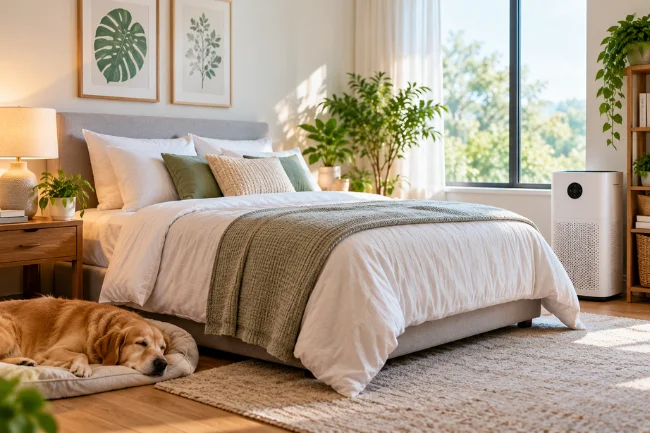
If improving the entire house feels overwhelming, I would start with the bedroom.
A useful bedroom strategy combines several small measures:
- keep smoke completely out of the home
- address visible dampness or mold
- control humidity
- wash bedding regularly
- reduce dust reservoirs where practical
- keep pets out if pet allergens trigger symptoms
- use effective vacuum filtration
- limit heavily fragranced products
- consider appropriately sized particle filtration
This creates what I think of as a clean-air anchor room: one space where exposure is intentionally kept lower for a large part of the day.
That concept can be especially practical when a person rents their home, shares space with others, or cannot immediately change every pollution source in the building.
Watch Outdoor Air Quality Too
Indoor air does not exist in isolation.
Wildfire smoke, vehicle exhaust, pollen, and other outdoor pollutants can enter through windows, doors, cracks, ventilation systems, and normal building leakage.
When outdoor particle pollution is high, reducing infiltration and using effective indoor particle filtration can be more useful than increasing ventilation.
The CDC advises people with asthma to pay attention to air-quality forecasts because outdoor pollution can trigger attacks.
This is one reason I would avoid rigid advice such as “always keep windows open.” Indoor-air decisions should change with outdoor conditions.
Use a Trigger-Based Plan Instead of Chasing Perfect Air
No home has perfectly pure air.
A more realistic goal is to lower exposure to the pollutants that matter most.
When I assess indoor air quality and asthma, I use four questions:
- What seems to trigger symptoms?
- Where is that trigger coming from?
- Can I stop or reduce it at the source?
- What ventilation, moisture control, cleaning, or filtration would reduce the remaining exposure?
This prevents people from spending money on low-priority changes while the main trigger remains untouched.
It also reflects current asthma guidance. NHLBI recommends indoor allergen reduction strategies for people who are exposed and sensitive to particular allergens rather than treating every possible allergen identically.
Know When Better Air Is Not Enough
Improving indoor air can help reduce exposure to asthma triggers, but it is not a substitute for medical asthma treatment.
If symptoms are becoming more frequent, nighttime breathing problems are increasing, usual activities are becoming difficult, or rescue medication is needed more often than expected, the asthma management plan may need professional review.
Environmental changes and medical care work alongside each other.
That distinction matters because even an exceptionally clean home cannot guarantee that asthma will remain controlled. Respiratory infections, exercise, weather changes, pollen, medications, and other factors can also trigger symptoms.
A Better Indoor-Air Routine Starts With One Room
If you want to improve indoor air quality for asthma, you do not need to change everything in the house in one weekend.
Start with the room where the person with asthma spends the most time. Identify obvious sources, check humidity, look for moisture, reduce smoke and fragrances, improve cleaning practices, and evaluate ventilation and filtration.
Then monitor what changes.
I prefer this measured approach because it helps reveal which improvements actually matter instead of turning indoor-air management into an expensive collection of products.
Cleaner indoor air is not about making a home sterile. It is about reducing avoidable exposure and creating an environment that supports, rather than works against, good asthma control.
Frequently Asked Questions
Can poor indoor air quality make asthma worse?
Yes. Smoke, mold, dust mites, pet allergens, air pollution, fragrances, and other indoor irritants can trigger symptoms in susceptible people with asthma.
What is the best indoor humidity level for asthma?
A relative humidity range of roughly 30% to 50% is generally recommended for limiting moisture-related asthma triggers such as mold and dust mites.
Do HEPA air purifiers help with asthma?
HEPA filtration can reduce airborne particles and allergens, but it should complement source control, cleaning, moisture management, and appropriate medical treatment rather than replace them.
Should I open windows if I have asthma?
It depends on outdoor conditions. Ventilation can reduce indoor pollutants when outdoor air is clean, but windows may be better kept closed during wildfire smoke, high pollution, or problematic pollen conditions.
Are ozone air purifiers safe for people with asthma?
Ozone-producing air cleaners should be avoided because ozone can irritate the lungs and may worsen asthma symptoms.

Salman Khayam is the Founder and Editorial Lead at Wellbeing Junction, with 5+ years of experience researching, writing, and reviewing general health and wellness content. He focuses on making complex health topics easier to understand through clear, practical, and evidence-informed information. Salman also oversees editorial quality across the site to help ensure content is accurate, useful, responsibly presented, and supported by reliable sources.