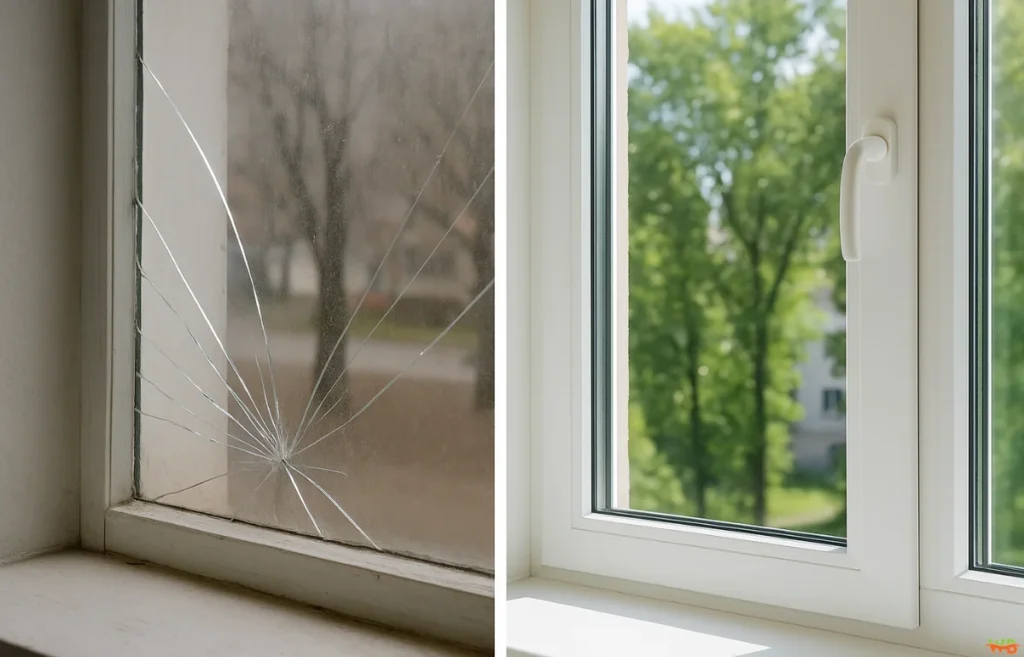
There are many ways to damage a window: there can be problems with the glass, the frame or the hardware. Some of these problems can be solved with repairs, but there are cases when the entire window needs to be replaced.
Сrtain types of damage can compromise a window’s structural integrity, energy efficiency, or safety to such an extent that full replacement becomes necessary. Understanding the nature and extent of the damage is key to determining the most appropriate solution.
Significant glass damage
Large cracks or shattered glass are obvious signs that windows replacement Yellowknife is necessary. If the glass is extensively cracked, especially if the cracks spread from the edges or through the entire pane, replacement is generally recommended. This is particularly true for tempered or safety glass, which tends to shatter into small, granular pieces when damaged. Replacing only the glass may not be an option if the frame is also damaged or if the pane cannot be separated from the sash.
Fogging between glass panels
Fogging or condensation between double- or triple-glazed panes indicates a broken seal. In insulated glass units , a sealed air or gas space exists between the panes to provide thermal efficiency. When this seal fails, moisture enters the unit and fogging occurs on the inside and outside surfaces that cannot be wiped away. A broken seal compromises insulation, increases energy costs, and often necessitates replacing the entire sealed unit, or even the window itself, depending on the frame design.
Frame damage
Warped or damaged frames, in combination with glass damage, may also necessitate replacing the entire window. If the frame has rotted (in wooden windows), corroded (in metal windows), or warped due to age, water damage, or poor installation, it may no longer securely support the glass. In such cases, replacing only the glass will not restore functionality or energy performance.
Impact damage
Storms or accidents can also cause impact damage that necessitates full window replacement, especially when the force affects both the glass and the window’s structural components. This is common in areas with frequent extreme weather, where windows must adhere to safety and building code standards.
Additionally, older windows with outdated glass types are better off being replaced entirely. For instance, single-pane glass provides minimal insulation compared to modern, energy-efficient windows. If such a window is damaged, upgrading to double- or triple-glazed windows during replacement improves long-term performance.

Daniel Brooks is a Healthy Home and Living Content Researcher at Wellbeing Junction with 5+ years of experience researching and writing about home safety, comfortable living environments, accessibility, everyday maintenance, and practical improvements that support healthier lifestyles. He focuses on clear, useful, and well-researched guidance that helps readers create safer and more supportive living spaces.