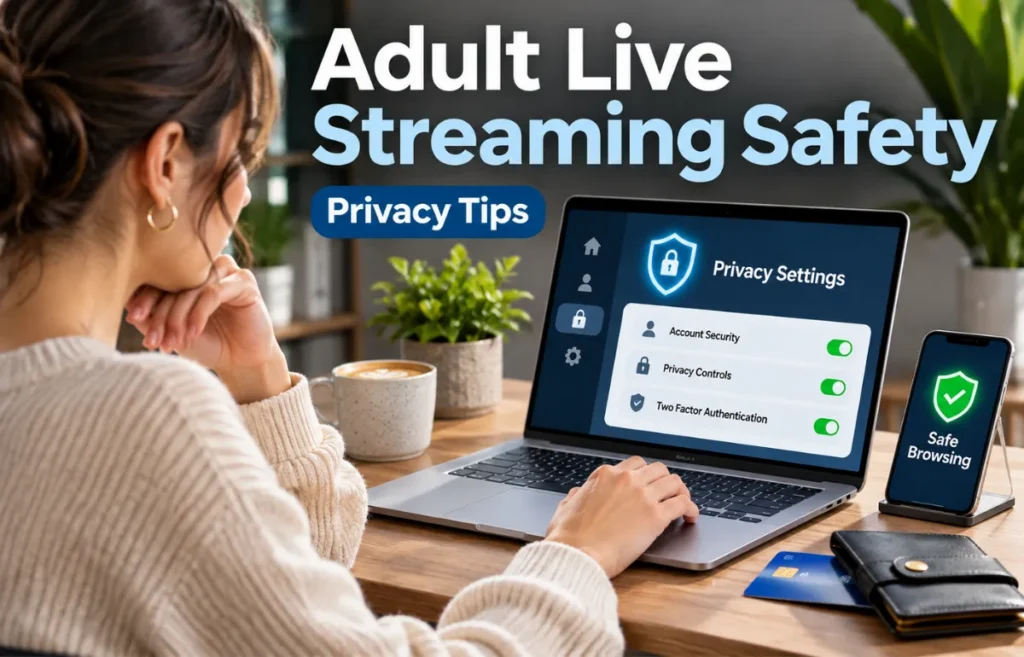
Adult Live Streaming Safety means protecting your privacy, identity, financial information, and personal boundaries when using platforms that broadcast adult-only content in real time. It involves choosing trustworthy services, recognizing online scams, understanding consent, and limiting the personal information you share.
Unlike prerecorded videos, live streaming allows immediate interaction between viewers and broadcasters. That interaction can introduce risks, including unwanted contact, unauthorized recordings, and financial fraud.
I believe the safest approach isn’t to assume every platform is dangerous or trustworthy. It’s to understand how these services work and make informed decisions before participating.
A few practical precautions can significantly reduce avoidable risks without making online activity unnecessarily complicated.
Why Adult Live Streaming Safety Deserves More Attention
Live streaming feels immediate and personal. Viewers can respond to broadcasters, exchange messages, and sometimes participate in private conversations.
However, real-time interaction can encourage people to disclose information they would normally keep private.
A casual conversation might reveal someone’s workplace, location, relationship status, or personal contact details.
According to Australia’s eSafety Commissioner, live broadcasts can be captured and redistributed without the broadcaster’s knowledge.
That possibility changes how I think about online privacy.
Even when a platform allows users to delete conversations or deactivate accounts, copies of shared information may remain outside its control.
The sensible approach is to consider what you’re comfortable having recorded before sharing anything personal.
How to Evaluate an Adult Live Streaming Platform
Choosing a platform shouldn’t depend entirely on attractive design, popularity claims, or advertisements.
I recommend checking the service’s transparency and security practices before creating an account.
Look Beyond the Website’s Appearance
Someone searching for nude live streams may encounter an unfamiliar platform. Before registering with any adult-oriented website, I would examine its privacy policy, payment procedures, and available safety controls.
A professionally designed homepage isn’t proof that a service protects its users.
Look for:
A clearly written privacy policy explaining data collection and retention
Age verification procedures appropriate to applicable laws
Accessible account deletion and reporting options
Transparent subscription prices and cancellation instructions
Clear rules about consent, recordings, and prohibited behavior
If these details are missing or difficult to locate, consider using another service.
Understand the Difference Between Safety Features and Warning Signs
Safety consideration
Positive sign
Warning sign
Privacy
Clear data collection policy
Unexplained personal data requests
Payments
Visible prices and billing terms
Hidden charges or unclear renewals
User protection
Accessible blocking and reporting
No obvious way to report abuse
Account security
Strong passwords and MFA support
Suspicious login links
Consent
Clear content and recording rules
No meaningful reporting process
This comparison isn’t a guarantee of reliability. It’s a practical starting point for identifying unnecessary risks.
Protect Your Personal Information Before Interacting
One of the simplest adult streaming privacy tips is to separate your online identity from your everyday identity.
That doesn’t mean providing false information where accurate details are legally required. It means avoiding unnecessary public disclosure.
For example, I would never recommend sharing a personal phone number, residential address, workplace, or private social media profile with an unfamiliar user.
Use Privacy Settings Carefully
Review your account’s visibility settings before joining public chats or interactive sessions.
If the platform supports them, consider restricting direct messages, limiting profile visibility, and disabling unnecessary notifications.
Use a unique password for each account. Enable multifactor authentication when available.
Remember that private browsing mode doesn’t make you invisible. It mainly limits information saved locally in that browser session, rather than preventing a website from collecting data.
The principle I follow is straightforward: share only what the service genuinely needs.
Why Consent Matters in Every Live Interaction
Consent is fundamental to responsible adult content consumption.
Everyone involved must be an adult, must participate voluntarily, and must understand what they’re agreeing to.
Consent also has limits. Agreeing to participate in a live conversation doesn’t automatically mean agreeing to be recorded or have that interaction distributed elsewhere.
Never Assume a Private Stream Cannot Be Recorded
A private room or restricted chat may reduce visibility, but it cannot eliminate the possibility of screen recording.
This matters because unauthorized recordings can lead to harassment, privacy violations, or blackmail.
The eSafety Commissioner provides guidance on respecting boundaries and understanding consent when sharing intimate material online.
For viewers, respecting boundaries means never pressuring someone to disclose personal information, perform unwanted activities, or continue an interaction.
For broadcasters, it means establishing clear limits and ending conversations when those limits aren’t respected.
If you encounter material that appears to involve a minor, coercion, or nonconsensual activity, stop engaging and report it through the appropriate channels.
Keep Payments and Subscriptions Under Control
Financial safety is another essential part of Adult Live Streaming Safety.
Some services use subscriptions, tokens, credits, or one-time payments. These arrangements aren’t inherently suspicious, but unclear billing creates unnecessary problems.
Before paying, check the total cost, billing frequency, refund policy, and cancellation procedure.
Watch for Subscription Traps
A low introductory price may become a recurring payment after a trial period.
I recommend checking whether a subscription renews automatically and saving a copy of the cancellation terms.
Avoid sending money directly to strangers who claim that payment is necessary to verify your identity or unlock an account.
Use established payment methods with appropriate dispute protections, and regularly review your financial statements for unfamiliar charges.
If a website requests information unrelated to the transaction, reconsider whether the payment is worthwhile.
Recognize Scams Before They Become Personal
Online fraud becomes particularly concerning when scammers exploit embarrassment, secrecy, or emotional pressure.
One common threat is sextortion, where someone threatens to distribute intimate material unless the victim pays money or meets additional demands.
Another involves fake profiles that establish trust before requesting financial assistance.
Warning Signs You Shouldn’t Ignore
Be cautious when someone:
Urgently requests money outside the platform
Asks you to move conversations to an unfamiliar messaging service
Requests passwords, verification codes, or financial details
Claims to have recordings and threatens exposure
Sends suspicious login pages or downloadable files
The Federal Trade Commission recommends using multifactor authentication and avoiding unexpected links that request sensitive information.
I would also avoid making financial decisions while feeling rushed, intimidated, or emotionally pressured.
Legitimate interactions shouldn’t depend on threats.
My Three-Question Safety Check Before Using a Platform
A useful way to reduce risk is to evaluate three areas before joining an unfamiliar service.
1. What Could Identify Me?
Consider whether your username, profile photo, connected accounts, or conversation details could reveal your identity.
If the answer includes information you’re uncomfortable sharing, adjust your settings before interacting.
2. What Could Cost Me Money?
Look for subscription renewals, paid features, and requests for off-platform payments.
Set a spending limit before using any paid service. Don’t rely on making decisions in the middle of an emotionally engaging conversation.
3. What Could Remain Online?
Ask whether your messages, photographs, or video interactions could be saved or shared.
If the possible long-term consequences make you uncomfortable, avoid sharing that material.
I find this framework more useful than treating safety as a single checkbox. It encourages people to assess identity, finances, and digital permanence separately.
Responsible Viewing Also Includes Mental Wellbeing
Online safety isn’t exclusively about passwords and financial transactions.
It also involves understanding how digital habits affect your time, relationships, and emotional wellbeing.
For some adults, online entertainment remains occasional and manageable. Others may notice that their viewing habits interfere with sleep, responsibilities, or relationships.
I wouldn’t automatically label frequent viewing as a problem. The more meaningful question is whether the activity remains within boundaries you’ve chosen.
Consider setting reasonable time and spending limits.
Take breaks when you feel emotionally overwhelmed, and avoid using online interactions as your only source of social connection.
If a digital habit starts creating persistent distress or disrupting everyday life, discussing it with a qualified mental health professional may help.
What to Do If Your Privacy Is Compromised
Even careful users can experience online harassment, suspicious transactions, or unwanted disclosures.
The first priority is to reduce further exposure.
Stop communicating with anyone making threats. Secure affected accounts, update compromised passwords, and contact your payment provider if financial information may be involved.
Preserve relevant evidence, such as usernames, messages, transaction records, and timestamps, without redistributing intimate material.
Report the incident to the platform and, when appropriate, local authorities.
For adults dealing with nonconsensual intimate image sharing, StopNCII.org offers a free service designed to help participating platforms identify and limit the circulation of reported images.
Seeking help early can reduce the harm caused by an escalating situation.
Frequently Asked Questions
Is adult live streaming safe?
It depends on the platform’s protections and your behavior. Strong privacy settings, clear consent rules, and careful financial decisions can reduce risks.
Can someone record a private live stream?
Yes. Screen recordings may be possible even when a platform restricts access, so private interactions should never be assumed completely confidential.
How can I protect my identity on adult streaming sites?
Limit public personal details, use unique passwords, enable multifactor authentication, and review privacy permissions before interacting.
Are adult live streaming websites free to use?
Some provide free access, while others charge for subscriptions or features. Always review billing terms before sharing payment details.
What should I do if someone threatens to share private recordings?
Stop communicating, preserve evidence, secure your accounts, and report the threat. Don’t pay or comply with additional demands.
Final Thoughts
Adult Live Streaming Safety comes down to making informed decisions about privacy, consent, money, and personal boundaries.
No platform can remove every online risk, but understanding those risks makes it easier to avoid preventable harm.
Before using an unfamiliar service, review its policies, protect your personal information, and think carefully about what you’re willing to share.
A few minutes spent checking these details can prevent problems that last much longer.
Ton Roobprom is an experienced writer focused on practical advice across technology, business, travel, beauty, lifestyle, and home improvements. He specializes in distilling complex subjects into clear, actionable insights to help you enhance your daily life.