Office upgrades do not always need to be dramatic to make a real difference. A better water cooler may not sound as exciting as a redesigned lobby or new conference room technology. Still, it can affect employee comfort, daily workflow, guest experience, and even facilities costs. Current workplace safety guidance, hydration research, and practical facility-planning considerations help businesses weigh the value of a smarter drinking-water setup.
For many offices, the old water cooler has become background noise. People use it, avoid it, complain when the bottle is empty, or bring their own drinks instead. Over time, that creates small problems that add up. Heavy jug deliveries take up storage space. Empty bottles pile up. Staff members lose time replacing containers. Water quality may vary. The breakroom may look less polished than the rest of the workplace.
Why the Office Water Setup Deserves More Attention
Every workplace needs reliable access to drinking water. OSHA’s sanitation standard requires employers to provide potable water in all workplaces, making water access a basic facilities responsibility, not a perk. Beyond compliance, the quality and ease of that access shape employee habits throughout the day.
When water is easy to find, tastes good, and feels clean, people are more likely to choose it over sugary drinks. The CDC recommends choosing water over sugary beverages and carrying a reusable bottle as practical hydration habits. In an office setting, the easier those habits are, the more likely they are to stick.
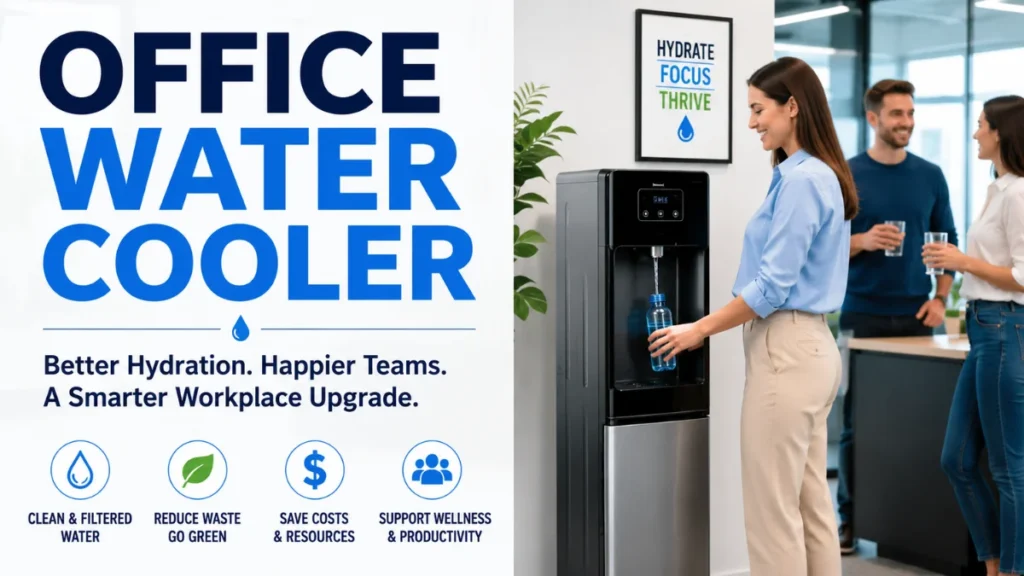
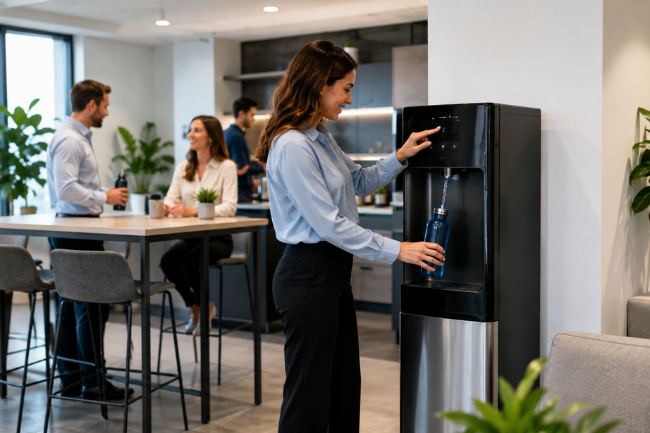
This is where the facilities decision becomes strategic. A traditional bottled cooler can work, but it often brings extra steps. Someone has to track inventory, manage delivery schedules, store full bottles, remove empty ones, and lift heavy containers into place. A bottleless water dispenser for office use can reduce those hassles by connecting directly to a water line and filtering water on demand.
That can improve the everyday experience in several ways. Employees get steady access to cold, filtered water without waiting for a delivery. Facilities teams reduce the need for manual bottle handling. Office managers can avoid the awkward moment when guests see empty jugs stacked near the kitchen. The result is a small workplace upgrade that feels more thoughtful than flashy.
The Business Case Goes Beyond Better-Tasting Water
A better drinking water system can support several business goals at once. First, it improves convenience. Employees do not need to leave the office for bottled water or rely on single-use bottles from the fridge. A reliable dispenser encourages people to refill reusable bottles throughout the day, supporting healthier routines and cleaner shared spaces.
Second, it can help reduce waste. The EPA tracks plastic as a major material category in municipal solid waste, and single-use beverage containers remain a visible part of everyday office trash. Cutting back on plastic water bottles may not solve every sustainability challenge, but it is a clear, easy step for businesses trying to reduce waste in common areas.
Third, it can create a more polished workplace experience. Clients, vendors, and job candidates notice the details. A clean, modern water station sends a quiet message that the business pays attention to comfort and care. That matters in offices where hospitality, culture, and first impressions matter.
There is also a cost-control angle. Bottled cooler programs may include delivery fees, bottle deposits, storage needs, and supply management time. Even when the line item looks small, the hidden labor can be real. Facilities teams spend time answering service questions, handling leaks, moving bottles, and keeping the supply area organized. A plumbed, filtered system can simplify those tasks.
When comparing options, businesses should consider more than just the monthly equipment price. The better question is, “What does this system remove from the facilities’ workload?” A good upgrade can reduce clutter, limit disruptions, support wellness goals, and make the office feel more up-to-date.
How to Choose a Cooler That Fits the Workplace
The best system depends on the size and layout of the office. A small team may need one compact dispenser near the kitchen. A larger workplace may need multiple stations placed near breakrooms, meeting areas, or high-traffic zones. Placement matters. Water access should be close enough that employees use it often, but not so close to desks that spills, noise, or lines become an issue.
Filtration is another key factor. Some offices only need better taste and odor control. Others may want more advanced filtration based on local water concerns, building age, or employee expectations. Facilities leaders should ask vendors which contaminants the system is designed to reduce, how often filters need to be replaced, and who handles service.
Maintenance should be easy to understand. A good water system should not create a new set of headaches. Ask how cleaning works, how filter changes are scheduled, and what happens if a unit needs repair. Clear service terms matter as much as the equipment itself.
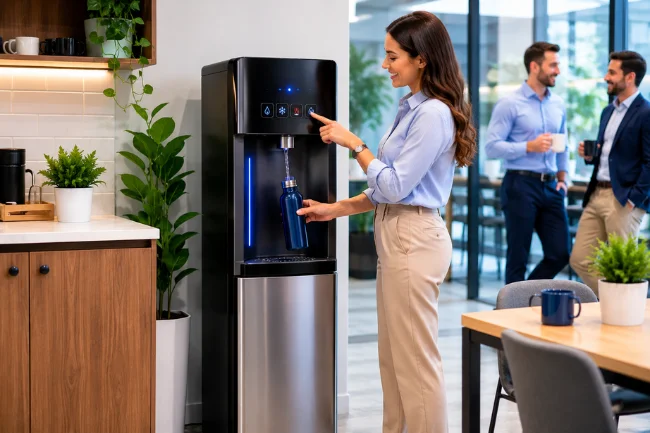
Temperature options can also affect daily use. Cold water is helpful for everyday hydration. Hot water can support tea, instant oatmeal, or quick beverage prep in the breakroom. Some teams may also prefer touchless or hands-free features, especially in shared spaces.
Before making the switch, facilities teams can review a few simple questions:
Is the current cooler creating storage, delivery, or maintenance issues?
Are employees bringing in bottled drinks due to taste or access concerns?
Does the current setup match the image the office wants to present?
Could a better system support wellness, sustainability, or hospitality goals?
The answers will often make the decision clearer. A cooler upgrade is not only about replacing equipment. It is about removing friction from the workday.
A Small Upgrade That Employees Will Actually Use
The best facilities decisions are the ones people notice for the right reasons. Clean, filtered water is practical, visible, and useful every day. It supports employee comfort without asking people to join a program, download an app, or change their routine.
For businesses reviewing office improvements this year, the water cooler deserves a place on the list. A modern system can reduce bottle clutter, make hydration easier, support a cleaner breakroom, and help facilities teams spend less time managing small recurring problems. In a workplace where every detail shapes the employee experience, upgrading the office water setup can be one of the simplest decisions with daily impact.
WELLNESS NOTESBetter Health
Simple weekly tips
WELLNESS UPDATES
Get Simple Wellness Ideas Every Week
Practical health, dental care, beauty, skin care, nutrition and personal growth tips delivered straight to your inbox.
No spam. Just useful wellness ideas and healthy living guidance.
Irfan Ali is the founder of Wellbeing Junction, where he specializes in synthesizing peer-reviewed research into actionable lifestyle guides. By bridging the gap between scientific data and daily habits, Irfan Ali provides evidence-based strategies for skin health, nutrition, and personal growth. Follow his work for trusted, human-first wellness advice.