
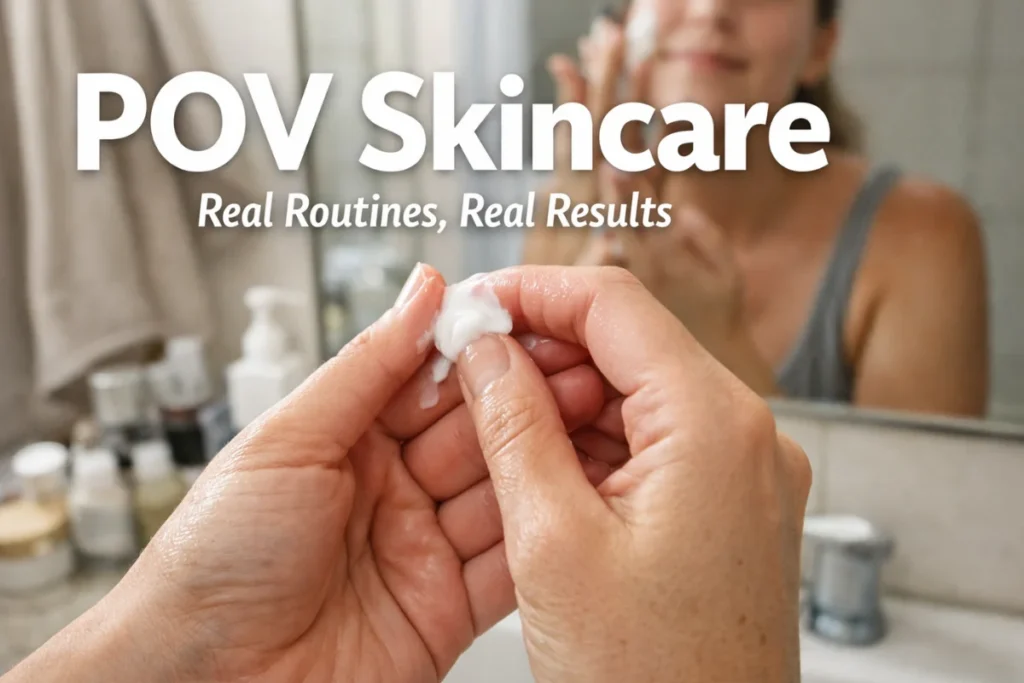
We have all seen those curated “shelfies” with perfectly lit serums and aesthetically pleasing glass jars. But lately, the internet has shifted toward something far more relatable: POV skincare.
If you spend any time on social media, you know the drill—the camera is positioned from your perspective, showing the messy reality of a morning routine, the actual texture of a breakout, or the way a thick night cream looks under harsh bathroom lighting. This trend is more than just a camera angle; it is a movement toward transparency in an industry often criticized for being overly filtered.
By centering the experience on the consumer’s “point of view,” POV skincare bridges the gap between high-end marketing and the actual application process. It allows us to see how products behave in real-time, away from the airbrushed studio sets.
Whether it is the satisfying “thwack” of a spatula in a cleansing balm or the immediate glow (or occasional redness) after a chemical exfoliant, this perspective offers a raw look at what it truly means to care for your skin.
Quick Takeaways: The POV Skincare Shift
-
Authenticity Over Aesthetics: It prioritizes showing real skin texture and product performance over curated perfection.
-
Educational Focus: These perspectives help users understand the correct amount of product to use and the proper application techniques.
-
Consumer Empowerment: By seeing how products look on various skin types in natural light, buyers can make more informed decisions.
-
Community Connection: The “Point of View” format creates a shared experience, making skincare feel less like a chore and more like a ritual.
-
De-stigmatizing Imperfection: Seeing creators handle acne, rosacea, or hyperpigmentation from their own perspective normalizes common skin concerns.
The Evolution of Skincare Content: From Professional to Personal
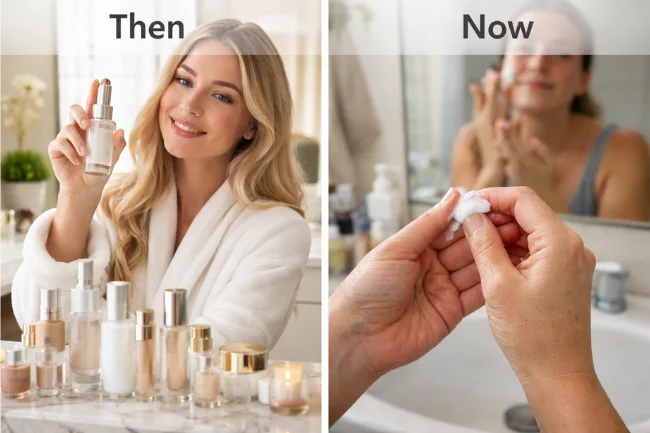
Before the rise of POV skincare, beauty content was largely aspirational. We watched celebrities or influencers give “tours” of their bathrooms, often showcasing products they were paid to promote but rarely showing the gritty details of use. Today, the demand for E-E.A.T (Experience, Expertise, Authoritativeness, and Trustworthiness) has changed the landscape. Readers want to see the experience of the product.
The shift started on platforms like TikTok and Instagram Reels, where the first-person perspective allows for a more intimate connection. When you watch a video from the creator’s eyes, you are essentially stepping into their shoes. You see the product exactly as they see it.
This transparency is vital because it addresses a long-standing issue in the beauty world: the “filter” problem. When skin is blurred by software, it is impossible to gauge if a vitamin C serum actually brightened a dark spot or if a moisturizer truly hydrated the skin.
Why Visual Honesty Matters for Skin Health
When we talk about POV skincare, we are talking about visual honesty. Scientific studies, such as those published in the Journal of Clinical and Aesthetic Dermatology, emphasize that consumer perception of product efficacy is heavily influenced by visual cues. If those cues are faked, the consumer’s expectations become unrealistic, leading to dissatisfaction and even psychological distress regarding their own appearance.
By viewing skincare through a realistic lens, users can identify with the “before” and “after” much more accurately. It highlights the importance of consistency over “miracle” overnight results.
Decoding the Product Texture: A First-Person Guide
One of the biggest benefits of the POV skincare trend is the ability to analyze product textures. It is one thing to read that a cream is “lightweight,” but it is another to see it disappear into the skin from the user’s perspective. Understanding these textures is crucial for building a routine that suits your specific skin type.
Understanding Common Textures in Your Routine
When you are watching or creating POV skincare content, pay attention to the “slip” of the product. Does it tug at the skin? Does it pill when another layer is added? These are the practical details that professional advertisements often omit but are essential for a functional daily regimen.
The Role of Ingredients in POV Skincare Success
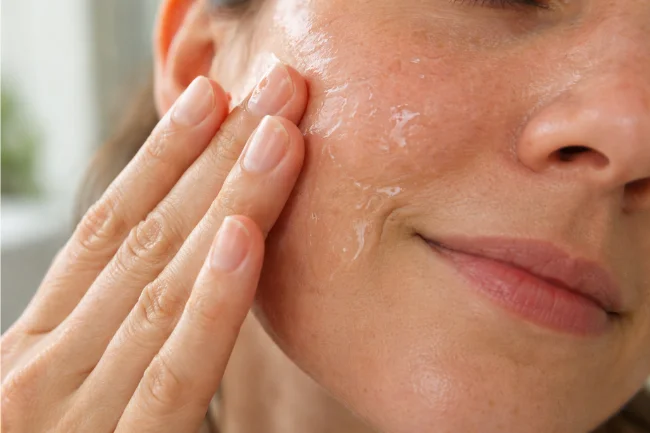
While the perspective is new, the science remains the same. The effectiveness of any routine depends on the bio-active ingredients within the formulas. In a first-person view, you can often see the immediate physiological response of the skin to certain actives.
Actives and Their Visible Effects
-
Hyaluronic Acid: You should see an immediate “plumping” effect as the humectant draws moisture into the surface layers.
-
Niacinamide: Over time, the POV perspective should show a reduction in the visible size of pores and a more even skin tone.
-
Retinoids: These are the long-game players. In a POV journey, you might see an initial period of “purging” or redness before the skin becomes smoother and more resilient.
-
L-Ascorbic Acid (Vitamin C): This provides that “lit-from-within” glow that is so popular in high-definition video content.
Navigating the “Skin Barrier” Trend
A major focus in current POV skincare discussions is the health of the skin barrier (the stratum corneum). Many users have realized that using too many high-strength actives can lead to “barrier burnout.” Seeing someone’s perspective as they strip back their routine to just the basics—cleanser, moisturizer, and SPF—has become a powerful educational tool. It teaches us that sometimes, less is more.
How to Curate Your Personal POV Skincare Routine
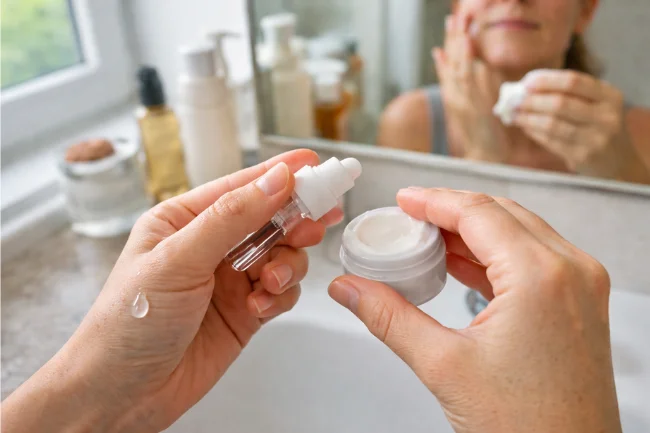
Creating a routine that works for your unique perspective requires a balance of trial, error, and scientific understanding. You shouldn’t just buy a product because it looks “satisfying” in a video. Instead, use that visual information as a starting point for your own research.
Step 1: Identify Your Primary Skin Concern
Are you dealing with active breakouts, or are you focused on healthy aging? Your perspective will change based on these goals. If you have oily skin, your POV will likely focus on oil control and minimizing shine. If you have dry skin, you’ll be looking for that “dewy” finish that lasts throughout the day.
Step 2: Layering for Maximum Efficacy
The order of operations matters. In a POV skincare world, we see the layering process happen in real-time. A general rule of thumb is to apply products from thinnest to thickest consistency.
The Psychological Impact of POV Skincare
There is a psychological component to why we love this content. It’s “oddly satisfying.” Watching someone carefully apply a face mask or massage their skin with a gua sha tool from their point of view can be incredibly relaxing. It taps into the ASMR (Autonomous Sensory Meridian Response) community, where the sounds of glass bottles clinking and the rhythmic tapping of fingers on skin provide a sense of calm.
However, we must also be careful. Even POV skincare can be staged. Intellectual honesty requires us to acknowledge that while a “first-person” view feels more authentic, lighting and “beauty modes” can still distort the truth. It is important to look for creators who show their skin in natural sunlight—flaws and all. This helps dismantle the “poreless” myth that has dominated the beauty industry for decades.
Challenging the Assumption of Perfection
We often assume that if a product doesn’t give us “perfect” skin, it isn’t working. POV skincare challenges this by showing that even people with extensive routines have bad skin days. Hormonal acne, seasonal dryness, and stress-induced dullness are universal.
Seeing a creator film their “POV” on a day when their skin is flaring up is arguably more valuable than seeing them on a “good” skin day. It builds resilience and helps us manage our own expectations.
Is POV Skincare Just a Fad or the Future?
Critics might argue that POV skincare is just another social media trend that will fade. However, the underlying principles—transparency, education, and realism—are here to stay. As consumers become more savvy, they will continue to demand content that reflects their lived reality.
The future of this trend likely involves more “smart” technology. We are already seeing apps that allow you to track your skin’s progress from your own point of view using AI-driven analysis. This merges the clinical side of dermatology with the personal side of a daily ritual.
The Role of Sun Protection in the Modern POV
No discussion about skincare is complete without mentioning SPF. In the POV skincare space, “sunscreen reels” have become a category of their own. Seeing the sheer volume of sunscreen required for adequate protection (the two-finger rule) from a first-person perspective has done more for sun safety than decades of static posters. It shows the texture, the “white cast” (or lack thereof), and how it sits under makeup.
FAQs About POV Skincare
What exactly is POV skincare?
It refers to skincare content filmed from the creator’s first-person perspective. The goal is to show the actual process of applying products, the true texture of formulas, and the realistic appearance of skin without professional studio interference or heavy filtering.
Why is POV skincare better than traditional ads?
Traditional ads are designed to sell a fantasy. POV skincare is designed to show a reality. It provides a clearer understanding of how much product to use, how it spreads on the skin, and what the immediate results look like in common household lighting.
Can I trust POV skincare reviews?
While generally more authentic, you should still exercise caution. Look for creators who disclose sponsorships and show their skin in various lighting conditions. Cross-reference their “point of view” with dermatological advice and ingredient lists.
Does POV skincare help with specific skin conditions?
Yes, because it often shows the “real” side of acne management. Instead of seeing a “perfect” face, you see how a creator covers or treats a blemish from their perspective, which can provide practical tips for your own routine and help normalize the condition.
How can I start my own POV skincare journey?
Start by documenting your routine for yourself. Take photos and videos in the same spot with the same lighting (preferably natural light) every day. This “point of view” will help you track changes that are often too subtle to notice in the mirror day-to-day.
Conclusion: Embodying the Perspective
The rise of POV skincare marks a turning point in how we consume beauty information. It prioritizes the “how” and the “why” over the “look at me.” By focusing on the authentic experience of using products, we can cultivate a healthier relationship with our skin—one that isn’t based on an unreachable standard of perfection but on the practical, daily act of self-care.
As you move forward with your own routine, try to view your skin through this lens of honesty. Don’t hide the textures or the occasional flare-ups. Instead, embrace the process and the science behind it.
For More Reading: The Science of Age Spots: Understanding and Treating Solar Lentigines

