When you slip on a favorite pair of jeans, a luxurious silk blouse, or even sit on durable car upholstery, you’re interacting with one of the most fundamental yet overlooked elements of textile production: the seam. Far from being a simple line of thread, the seam is the very foundation—the unseen architecture—that holds the entire structure together. In the world of sewing, tailoring, and manufacturing, these foundations are known by the German term Nahttypen, which literally means “types of seams.”
Understanding and correctly applying the various Nahttypen is not just a technical skill; it’s a critical decision that dictates the strength, longevity, and finished aesthetic of any textile product. For professionals and serious hobbyists alike, mastering this crucial element is the difference between a garment that holds up beautifully over time and one that quickly unravels.
Simply put, Nahttypen refers to the specific methods and techniques used to join two or more pieces of fabric together. Think of it less as a single stitch and more as a complete structural solution. Every textile joint must perform several duties simultaneously: provide structural integrity, manage fabric tension, and often, contribute to the design.
The choice of seam type ensures the piece achieves the desired outcome. For example, a seam designed for a heavy-duty tent must prioritize strength and water resistance, while a seam on delicate lingerie must prioritize comfort and a flawless aesthetic.
Why the Right Seam Choice Matters
Choosing the correct type of seam is a decision driven by several interconnected factors, making it a critical step in garment construction and design. Ignoring these factors often leads to disappointing results, even if the rest of the sewing techniques are perfect.
Fabric Weight and Texture: Heavy-duty fabrics like denim demand a seam that can handle stress and multiple layers, while sheer fabrics like chiffon require a seam that won’t distort the material or show through.
Garment Purpose and Durability: Workwear, uniforms, and outdoor gear require high-stress seams (like a Flat-Felled Seam) that can resist repeated abrasion and stress. Delicate items benefit from seams that hide raw edges and prioritize a refined finish.
Aesthetic Appeal: Seams can be decorative (topstitching), invisible (hand-sewn), or structural (flat-felled). The chosen seam contributes significantly to the final look of the piece.
Ultimately, the mastery of Nahttypen is what transforms mere fabric into a functional, durable, and professional-grade item.
The Foundational Four: Essential Nahttypen and Their Applications
While hundreds of variations exist, four primary categories form the backbone of almost all sewing and tailoring. These Nahttypen are the ones every designer and seamstress should know intimately.
1. The Open Seam (Offene Naht)
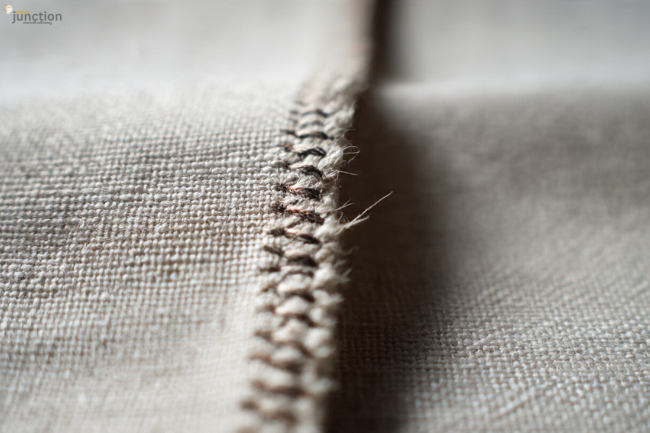
This is perhaps the most common and simplest seam used in garment construction. After the pieces are stitched together, the seam allowances are pressed open and often finished (via serging, zigzag stitch, or binding) to prevent fraying.
The Open Seam provides a flat finish that minimizes bulk, making it ideal for woven, medium-weight fabrics like cotton and linen used in blouses, skirts, and non-fitted dresses. Because it is simple to press, it is essential for achieving a neat, professional look on basic garments.
2. The Closed Seam (Geschlossene Naht)
Also known as a pressed-to-one-side seam, this type involves pressing both seam allowances together to one side after stitching. While it results in slightly more bulk than an open seam, it is inherently stronger and quicker to execute.
The Closed Seam is frequently found in items requiring enhanced durability, such as jackets, coats, and some forms of sportswear. Its strength makes it a reliable choice for heavier fabrics where a completely flat finish is less critical than resistance to pulling and stress.
3. The Elegant French Seam (Französische Naht)
The French Seam is the gold standard for high-end textile production and working with lightweight, delicate, or lightweight, translucent fabrics like organza, silk, and chiffon. Its elegance comes from its function: it completely encloses the raw edges of the fabric within two separate lines of stitching.
This is a two-step process that results in a perfectly neat interior finish, meaning the garment looks just as flawless on the reverse side as on the face side. Because it provides finished edges without the bulk of a typical finishing stitch, it’s prized for lingerie and expensive designer wear.
4. The Mighty Flat-Felled Seam (Kappnaht)
If you are looking for maximum seam strength and durability, the Flat-Felled Seam is the answer. It is instantly recognizable as the seam used on nearly all denim jeans, tents, and heavy workwear.
The Flat-Felled Seam is created by folding the raw edge of one seam allowance over the other, pressing it flat, and then topstitching it down. This process creates a flat, reinforced, double-stitched join that is incredibly resistant to wear, tear, and fraying. It also offers a clean, signature look, often highlighted by contrasting thread color.
Comparing Key Nahttypen
To better illustrate the strategic decision-making involved in garment construction, here is a comparison of these foundational Nahttypen.
Comparing Key Nahttypen
Nahttypen (Seam Type)
Best For
Strength Level
Aesthetic Goal
Key Benefit
Open Seam
Lightweight/medium-weight woven fabrics
Medium
Flat, Minimal Bulk
Reduces fabric thickness.
Closed Seam
Heavier, non-fitted fabrics
High
Structured, Durable
Quick to sew, very strong.
French Seam
Sheer, delicate, or luxury fabrics
Medium
Clean, Enclosed Edges
Perfect interior finish.
Flat-Felled Seam
Denim, Canvas, Workwear, Industrial use
Very High
Bold, Reinforced
Maximum durability and fray prevention.
Beyond the Basics: Nahttypen in Specialized Fields
The application of Nahttypen extends far beyond simple clothing. In modern industry, these techniques are deployed strategically to meet specific performance and design goals.
In high fashion, seams are not merely functional; they are artistic tools used to shape, sculpt, and enhance the human form. Designers use variations like Princess Seams to contour bodices and create elegant fits. Topstitched Seams, which are essentially decorative lines of stitching, are used in casual wear to add visual interest and a professional finish to pockets and yokes. Even seemingly invisible seams are a mark of luxury, proving that the seam can define the very structure and style of a garment.
The Role of Seam Strength in Industrial Textiles
For industrial textiles—think automotive upholstery, protective gear, or outdoor equipment—the seam’s strength is a matter of safety and performance. Upholstery relies on reinforced seams to handle constant friction and weight. Technical fabrics used in military or medical applications utilize specialized lock stitch quality to ensure the integrity of the material under extreme conditions. The precise engineering of these Nahttypen is non-negotiable, prioritizing function over pure aesthetics.
The Future of Fabric Joining: Modern Nahttypen Innovations
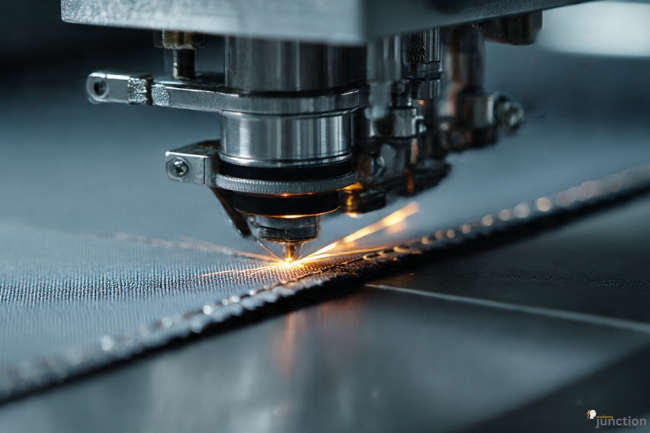
As materials science evolves, so too do sewing techniques. Modern Nahttypen often move beyond thread and needle altogether, adapting to the demands of performance fabrics. Innovations include laser-sealed seams used in waterproof sportswear and outerwear, where heat melts the fabric edges together, creating a perfectly smooth, impervious seal.
Another key development is the use of bonded seams created with specialized heat-activated adhesives. These deliver a completely flat, seamless finish, especially favored in sleek athletic apparel where reducing chafing and bulk is a priority. These new approaches reflect the ever-growing demand for seamless technology and high-performance fabric joining.
Wrapping It Up: Your Next Stitch
The concept of Nahttypen is foundational to quality in the textile world. It’s the framework upon which all successful sewing, whether for high fashion or extreme industrial use, is built. The next time you begin a project, pause and consider: what is the true purpose of this seam? What level of durability is required? The right Nahttypen choice will save you time, prevent structural failure, and elevate the quality of your work instantly.
To truly master this essential skill, your next step should be simple: practice. Take two different types of fabric—a sheer silk and a heavy denim—and practice sewing a French Seam on one and a Flat-Felled Seam on the other. Feel the difference, see the difference, and integrate this knowledge into your craft.
Ton Roobprom is an experienced writer focused on practical advice across technology, business, travel, beauty, lifestyle, and home improvements. He specializes in distilling complex subjects into clear, actionable insights to help you enhance your daily life.