
Cruelty-Free Skin Care wasn’t always part of my vocabulary. Years ago, I bought products based on scent, texture, or whatever promise was printed in bold on the label. I assumed most brands were doing the right thing behind the scenes. They weren’t—and learning that changed the way I approach skin care entirely.
This article is my personal, experience-driven guide to cruelty-free skin care: what it actually means, how I evaluate brands, where marketing gets misleading, and how I’ve built a routine I feel good about using every day. Nothing here comes from theory alone. This is the result of years of trial, research, frustration, and finally, clarity.
Quick Summary
-
Cruelty-free skin care means no animal testing at any stage, not just the finished product
-
“Cruelty-free” and “vegan” are not the same—and confusing them is common
-
Certifications matter more than brand claims or green packaging
-
I’ve found cruelty-free products to be just as effective, often better formulated
-
Supporting cruelty-free brands influences industry behavior more than most people realize
Why Cruelty-Free Skin Care Became Non-Negotiable for Me
The Moment My Perspective Shifted
I still remember the first time I learned how animal testing actually works in the cosmetics industry. It wasn’t an abstract idea—it was a detailed description of tests done on rabbits and guinea pigs for ingredients that already had decades of safety data. That moment stuck with me.
What bothered me most wasn’t just the cruelty. It was the unnecessary nature of it. Skin care isn’t life-saving medicine. It’s a cleanser, moisturizer, and sunscreen. Knowing animals were harmed for products I used casually didn’t sit right with me.
Once I started paying attention, cruelty-free skin care stopped being a “nice to have” and became a baseline requirement.
What Cruelty-Free Skin Care Actually Means (And What It Doesn’t)
The Real Definition (Beyond Marketing)
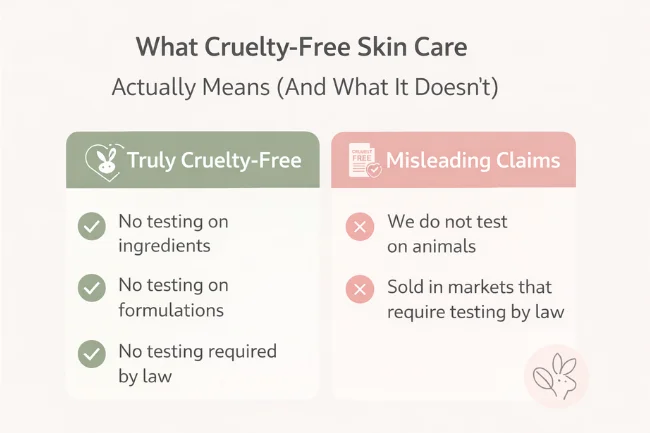
At its core, cruelty-free skin care means:
-
No animal testing on ingredients
-
No animal testing on formulations
-
No animal testing by third parties
-
No animal testing is required by law in markets where the product is sold
That last point matters more than most people realize.
Some brands don’t test on animals themselves but sell in countries where animal testing is legally required for imported cosmetics. In my book, that’s not cruelty-free—regardless of how softly the brand words it.
Cruelty-Free vs. Vegan: Not the Same Thing
This is one of the most common misunderstandings I see.
-
Cruelty-free = not tested on animals
-
Vegan = no animal-derived ingredients
A product can be cruelty-free but not vegan (for example, containing beeswax or honey). It can also be vegan but not cruelty-free if it was tested on animals.
I personally prioritize cruelty-free first, then vegan when possible—but I always check both.
How I Evaluate Cruelty-Free Skin Care Brands
Certifications I Actually Trust
I don’t rely on brand websites alone. I look for independent verification, especially:
-
Leaping Bunny
-
PETA’s Beauty Without Bunnies (with caution and deeper checks)
Leaping Bunny is my gold standard because their requirements include supply chain audits and ongoing compliance.
For anyone serious about cruelty-free skin care, I strongly recommend using Leaping Bunny’s official brand database as a reference point.
Red Flags I’ve Learned to Watch For
Over time, patterns emerge. These usually signal that a brand is avoiding full transparency:
-
“We do not test on animals unless required by law.”
-
“Finished products are not tested on animals” (ingredients might be)
-
No clear stance on third-party testing
-
Selling in mainland China without clarification on regulatory changes
When I see these, I dig deeper—or move on.
Cruelty-Free Skin Care vs. Conventional Skin Care: A Practical Comparison
Here’s a simplified breakdown based on what I’ve personally observed across dozens of brands.
| Aspect | Cruelty-Free Skin Care | Conventional Skin Care |
|---|---|---|
| Animal testing | None at any stage | May occur during development or regulation |
| Ingredient transparency | Typically high and clearly disclosed | Often limited or vague |
| Innovation approach | Human-relevant and alternative testing methods | Relies on legacy animal testing models |
| Brand accountability | Audited through certifications | Mostly self-regulated |
| Consumer trust | Built on ethics + performance | Built primarily through marketing |
This table reflects trends, not absolutes—but after years of comparing products side by side, these differences are consistent.
What I Learned Firsthand About Performance
The Big Myth: “Cruelty-Free Isn’t as Effective”
I believed this early on. I worried that avoiding animal testing meant compromising results. That assumption didn’t last long.
In reality, cruelty-free skin care brands often rely on:
-
In-vitro testing
-
Human clinical trials
-
Computer modeling
-
Long-established ingredient safety data
These methods are not only ethical—they’re often more relevant to human skin.
Texture, Stability, and Results
One surprise for me was how elegant many cruelty-free formulations feel. Lightweight serums, well-balanced moisturizers, and sunscreens that don’t pill or leave white casts.
In my experience, cruelty-free brands tend to invest heavily in formulation science because they can’t lean on outdated testing models. The result is smarter ingredient combinations and better user experience.
Building My Cruelty-Free Skin Care Routine
How I Transitioned Without Wasting Products
I didn’t throw everything away overnight. I replaced items gradually as they ran out. That approach helped me stay realistic and avoid guilt or overwhelm.
Here’s how I phased things in.
| Product Category | Replacement Order | Reason |
|---|---|---|
| Cleanser | First | Easy swaps with minimal risk |
| Moisturizer | Second | Daily essential for skin barrier |
| Sunscreen | Third | Harder to find good cruelty-free formulas |
| Active treatments | Gradually | Required research and skin adjustment |
| Masks & extras | Last | Less frequent use |
This approach made cruelty-free skin care sustainable for me—not just ideologically, but practically.
Ingredients I Pay Attention to in Cruelty-Free Skin Care
Not Just “Clean,” But Thoughtfully Formulated
Cruelty-free doesn’t automatically mean gentle or suitable for everyone. I still read ingredient lists carefully.
Some ingredients I personally respond well to:
-
Niacinamide (in moderate percentages)
-
Ceramides from plant or lab-based sources
-
Squalane (olive- or sugarcane-derived)
-
Bakuchiol as an alternative to retinol
I avoid blanket rules. Instead, I test slowly and listen to my skin.
The Environmental and Ethical Overlap
Why Cruelty-Free Often Goes Further
Many cruelty-free skin care brands also align with:
-
Sustainable packaging
-
Ethical sourcing
-
Transparent supply chains
-
Reduced environmental impact
That’s not guaranteed—but there’s often overlap because these brands are built on values, not just profit margins.
For me, cruelty-free skin care became a gateway into more conscious consumption overall.
The Cost Question: Is Cruelty-Free Skin Care More Expensive?
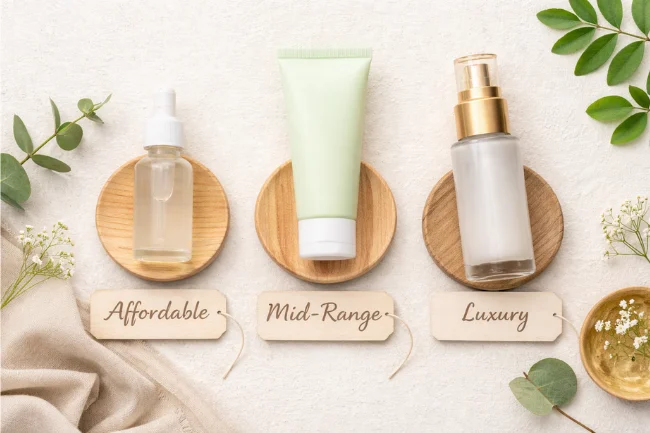
Short answer: sometimes—but not always.
What I’ve noticed is that cruelty-free skin care spans every price range. Drugstore options exist. Indie brands exist. Luxury cruelty-free brands exist, too.
What you’re often paying for is:
-
Better sourcing
-
Smaller batch production
-
Independent certification costs
When I factor in performance and ethics, the value equation makes sense to me.
My Personal Recommendation
If you’re new to cruelty-free skin care, don’t aim for perfection. Aim for progress.
Start with one product you use daily. Verify the brand through a trusted source. Pay attention to how your skin reacts. Build from there.
From my own journey, consistency matters more than purity. Supporting cruelty-free brands—even imperfectly—signals demand. And demand is what changes industries.
Next Step: How to Move Forward Today
Choose one product in your routine and check whether it’s truly cruelty-free using an independent database. If it isn’t, research an alternative and make the switch when you’re ready. That single step matters more than you think.
FAQs
What does cruelty-free skin care really mean?
Cruelty-free skin care means that no animal testing occurs at any point in the product’s development, including ingredients, formulations, and regulatory testing by third parties.
Is cruelty-free skin care regulated by law?
No, “cruelty-free” is not a legally regulated term in many countries. That’s why third-party certifications are important for verification.
Can a brand be cruelty-free but sell globally?
Yes, but it depends on the markets. Some countries have updated regulations that no longer require animal testing. Brands must be transparent about where and how they sell.
Are cruelty-free products safe for sensitive skin?
They can be, but cruelty-free does not automatically mean gentle. Ingredient formulation matters more than the testing status.
Does choosing cruelty-free skin care actually make a difference?
In my experience, yes. Consumer demand has already pushed major brands to change testing policies. Individual choices collectively shape industry standards.
Disclaimer:
This article reflects my personal experience, research, and opinions on cruelty-free skin care. It is shared for informational purposes only and is not intended as medical or professional advice. Always review product labels, brand policies, and certifications on your own, and consult a qualified professional if you have specific skin concerns.
For More Reading: Morning Skin Care Routine: Simple AM Habits That Work

