Healthcare providers today face enormous pressure from nearly every direction. Insurance companies continue tightening reimbursement requirements, operational costs keep rising, staffing shortages remain widespread, and patients expect faster, more transparent billing experiences. Even highly respected practices with strong patient volume are finding it harder to maintain consistent financial stability.
As a result, healthcare RCM services have become a critical part of running a successful medical organization.
Revenue cycle management affects far more than billing alone. It influences cash flow, staffing decisions, patient satisfaction, compliance performance, and overall operational efficiency. When the revenue cycle functions properly, providers can focus more energy on patient care and less on chasing unpaid claims.
Unfortunately, many practices still struggle with preventable billing problems that quietly drain revenue month after month.
Claims get denied because of missing information. Insurance verification isn’t completed correctly. Follow-ups take too long. Prior authorizations are delayed. Coding inconsistencies create underpayments. Over time, these issues begin affecting every part of the organization.
Strong RCM operations help providers solve these problems before they become major financial risks.
Healthcare Billing Has Become More Difficult Than Ever
Medical billing used to be much simpler than it is today. Years ago, providers dealt with fewer payer rules, less administrative oversight, and lower patient financial responsibility. That environment has changed completely.
Modern healthcare reimbursement involves constant documentation requirements, changing payer guidelines, compliance regulations, and detailed reporting expectations.
Even relatively straightforward claims may require multiple layers of review before payment is approved.
Small mistakes now create larger financial consequences than ever before. A missing modifier, incomplete authorization, or incorrect diagnosis code can easily delay reimbursement for weeks.
Many practices underestimate how much revenue they lose through inefficient workflows and preventable denials.
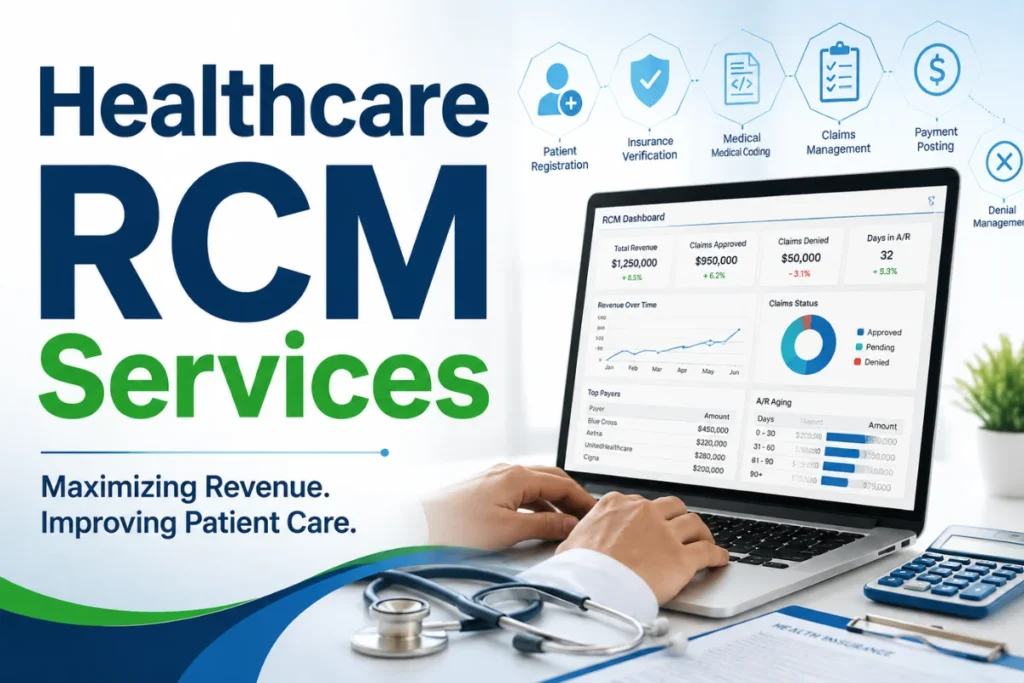
Healthcare RCM services help create structure throughout the billing process. They organize workflows across registration, eligibility verification, claims management, collections, denial follow-up, and payment posting to improve overall reimbursement performance.
When operational consistency improves, providers generally notice stronger cash flow fairly quickly.
Front-End Accuracy Helps Prevent Denials
A large percentage of billing problems actually begin during patient intake.
If insurance information is outdated or entered incorrectly, claims are likely to be rejected later. Even small demographic errors can create major reimbursement delays.
This is why front-end revenue cycle processes have become increasingly important.
The medical assistant often contributes heavily to this stage of operations. Medical assistants help collect insurance information, confirm patient demographics, update records, and support documentation workflows during appointments.
When these tasks are handled accurately, practices avoid many preventable denials.
Healthcare organizations are increasingly training front-office teams on revenue cycle basics because they understand how important operational accuracy has become.
Improving front-end processes may not seem exciting, but it has a major financial impact over time.
Prior Authorization Continues Creating Delays
Very few administrative tasks create more frustration in healthcare than prior authorization.
Insurance companies now require approvals for countless procedures, medications, imaging studies, and specialty services. The process is often slow, repetitive, and inconsistent between payers.
Staff members spend huge amounts of time gathering records, submitting forms, and contacting insurance companies just to secure approvals for medically necessary care.
When prior authorization processes are poorly managed, financial problems quickly follow.
Appointments may get rescheduled, treatments delayed, and claims denied entirely because approvals were incomplete or missing. This creates stress for both providers and patients.
Healthcare RCM specialists help streamline authorization workflows by managing payer communication more proactively and tracking approvals carefully.
Experienced teams understand which documents payers require and how to reduce authorization-related denials. Faster approvals generally lead to smoother scheduling and better reimbursement timelines.
Patients also benefit because care moves forward with fewer delays and less confusion.
Medical Coding Directly Impacts Revenue
Accurate medical coding plays one of the biggest roles in determining reimbursement success.
Insurance carriers rely on coding data to evaluate medical necessity, reimbursement eligibility, and payment amounts. If coding errors occur, claims may be delayed, underpaid, or denied completely.
Coding complexity has increased substantially over time. Providers must now navigate constant CPT updates, ICD-10 revisions, modifier requirements, and payer-specific documentation standards.
This is why experienced medical coding professionals are so valuable.
Strong coding support improves reimbursement accuracy while reducing compliance risks. Properly coded claims are also less likely to trigger payer audits or require costly rework later.
Many practices outsource coding support because recruiting experienced coders internally has become difficult. Certified coding professionals remain in extremely high demand throughout the healthcare industry.
Outsourced teams often provide broader specialty expertise while helping organizations maintain operational consistency.
When coding quality improves, financial performance usually improves as well.
AR Management Helps Stabilize Cash Flow
One of the most important indicators of revenue cycle health is accounts receivable performance.
If claims remain unpaid for too long, providers eventually experience cash flow instability. Operating expenses continue regardless of reimbursement delays, which creates increasing pressure throughout the organization.
Weak AR management is one of the biggest reasons practices struggle financially.
Unpaid claims may sit untouched for weeks because employees are balancing too many responsibilities. Denied claims sometimes go unresolved entirely simply because nobody had time to appeal them properly.
Healthcare RCM specialists focus heavily on reducing aging AR balances.
They track unpaid claims, prioritize follow-up efforts, analyze payer trends, and manage appeals systematically. This process helps providers recover revenue faster and more consistently.
Some practices are surprised by how much collectible revenue exists inside aging AR reports once experienced teams begin investigating unresolved accounts closely.
Better AR management also creates stronger financial predictability, which helps leadership teams plan staffing and operational investments more confidently.
Staffing Challenges Continue to Affect Revenue Cycle Departments
The healthcare staffing shortage extends beyond physicians and nurses. Revenue cycle departments are struggling, too.
Experienced billers, coders, authorization specialists, and collections representatives are increasingly difficult to recruit and retain. Smaller practices often face the biggest challenges because they cannot always compete with large healthcare systems on salary and benefits.
Turnover creates workflow disruptions that often lead to more billing errors and reimbursement delays.
Healthcare RCM outsourcing has become more popular partly because providers need stable operational support without constantly rebuilding internal teams.
Outsourced billing partners usually provide larger staffing resources, deeper payer knowledge, and more advanced reporting systems. This helps organizations maintain more consistent financial operations over time.
For many practices, outsourcing now represents a strategic operational decision rather than simply a cost-saving measure.
Technology Is Transforming Revenue Cycle Operations
Technology continues to reshape how healthcare organizations manage financial workflows.
Modern RCM systems automate many administrative tasks that once required hours of manual effort. Insurance verification, claims scrubbing, denial tracking, and payment posting can now happen much more efficiently through integrated software platforms.
Artificial intelligence is also beginning to influence revenue cycle management more heavily.
Some systems can identify high-risk claims before submission or flag missing documentation automatically. Predictive analytics also helps providers identify reimbursement patterns and operational bottlenecks more quickly.
These tools improve efficiency and reduce preventable claim errors.
Still, technology alone cannot solve every revenue cycle issue.
Experienced professionals remain essential for managing payer disputes, appeals, compliance concerns, and complex reimbursement situations.
The strongest healthcare RCM operations combine advanced automation with experienced billing and coding expertise.
Patients Want Simpler Billing Experiences
Patient financial responsibility has increased dramatically over the last several years.
High-deductible insurance plans are now extremely common, which means patients are paying larger portions of healthcare costs directly out of pocket.
Because of this, patients expect clearer communication and more convenient payment options.
Confusing statements, inaccurate estimates, or poor billing communication can frustrate patients and delay collections significantly.
Healthcare RCM services help practices improve patient financial engagement through digital billing tools, online payment portals, automated reminders, and flexible payment plans.
Improving the billing experience not only strengthens collections but also improves overall patient satisfaction.
Patients appreciate transparency and faster communication regarding healthcare costs.
Strong Revenue Cycle Operations Support Long-Term Success
Healthcare organizations today operate in a highly demanding financial environment.
Administrative complexity, insurance scrutiny, reimbursement pressure, and staffing shortages will likely continue affecting providers for years to come.
Because of that, strong healthcare RCM systems are becoming essential for long-term stability and growth.
Efficient revenue cycle management helps providers reduce denials, improve collections, stabilize cash flow, and reduce administrative burdens throughout the organization.
From prior authorization and medical coding to AR management and patient billing, every part of the revenue cycle contributes directly to operational success.
Practices that invest in organized, efficient RCM strategies position themselves far better to navigate the challenges facing modern healthcare today.

Salman Khayam is the Founder and Editorial Lead at Wellbeing Junction, with 5+ years of experience researching, writing, and reviewing general health and wellness content. He focuses on making complex health topics easier to understand through clear, practical, and evidence-informed information. Salman also oversees editorial quality across the site to help ensure content is accurate, useful, responsibly presented, and supported by reliable sources.