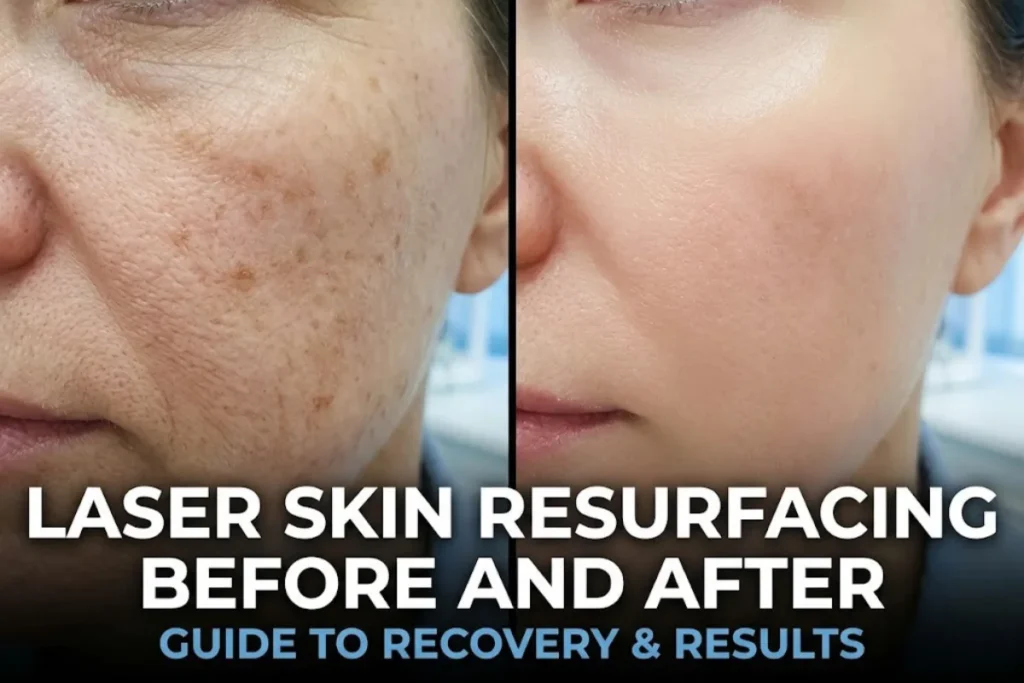
We all look in the mirror eventually and notice that our skin has a few stories to tell—and for many of us, searching for real laser skin resurfacing before and after results becomes the first step toward a true skin reset. Maybe it’s the lingering reminder of teenage acne, fine lines creeping in around the eyes, or sunspots from years of enjoying the outdoors. While a solid skincare routine of retinoids and Vitamin C can do wonders, there comes a point where topical products hit a metaphorical wall, and advanced dermatological treatments are needed to truly restore your complexion.
When you want to truly hit the reset button on your complexion, laser skin resurfacing stands out as one of the most effective, scientifically backed treatments available in modern dermatology.
As someone who has spent years studying, analyzing, and working closely with advanced aesthetic technologies, I understand that the world of lasers can feel incredibly intimidating. Terms like “ablative,” “fractional,” and “CO2” get thrown around like alphabet soup.
My goal today is to demystify this transformative procedure. We will explore exactly how laser skin resurfacing works, look at the different technologies available, weigh the pros and cons, and walk through what the healing process actually looks like. By the end of this guide, you will have the clarity needed to decide if this treatment aligns with your unique skin goals.
Understanding the Science: How Laser Skin Resurfacing Works
To appreciate what lasers can do for your skin, we first need to look at how our skin damages and repairs itself. Our skin is primarily composed of two main layers: the epidermis (the outer layer you see) and the dermis (the deeper layer housing structural proteins).
Over time, UV exposure, pollution, and natural aging break down collagen and elastin—the scaffolding that keeps our skin bouncy and firm.
Laser skin resurfacing uses highly concentrated beams of light energy to address this structural decline. Instead of using a chemical peel or a mechanical scrub, a laser delivers precise thermal energy to the target area. This energy performs two primary functions:
Vaporization or Controlled Damage: It removes damaged outer layers of skin with microscopic precision.
Collagen Stimulation: It heats the underlying dermis, which triggers a natural wound-healing response. Your body panics in a controlled way, rushing to produce fresh, organized bundles of collagen and elastin.
As the treated area heals, the old, dull, or scarred skin sloughs away. In its place, a smoother, tighter, and more evenly pigmented layer of skin emerges. It is a highly controlled method of out with the old, and in with the new.
Ablative vs. Non-Ablative Lasers: Choosing Your Laser Skin Rejuvenation Approach
If you start researching laser skin resurfacing, you will immediately run into two primary categories of lasers: ablative and non-ablative. Choosing between them is the most significant decision you and your dermatologist will make, as it dictates your results, your budget, and your downtime.
Ablative Lasers: The Deep Laser Skin Peeling Option
Think of ablative lasers as a major renovation project. These lasers use high-intensity light to completely vaporize the outermost layers of the skin. By removing the damaged surface entirely, they force the body to build a brand-new epidermis from scratch.
The two most common types of ablative lasers are:
Carbon Dioxide (CO2) Lasers: The gold standard for deep wrinkles, severe sun damage, and pronounced acne scars. CO2 lasers have been used since the 1990s but have evolved significantly to be safer and more precise.
Erbium (Er:YAG) Lasers: These are slightly gentler than CO2 lasers. They are excellent for fine to moderate wrinkles and superficial pigmentation issues, often resulting in fewer side effects and a quicker recovery window.
Ablative lasers deliver dramatic, often life-changing results in just a single session. However, that intensity comes at a cost: you will experience significant redness, swelling, and peeling, requiring anywhere from one to three weeks of dedicated social downtime.
If an ablative laser is a total home demolition, a non-ablative laser is a targeted interior remodel. These lasers leave the surface of your skin completely intact. Instead of vaporizing the epidermis, the light passes harmlessly through the top layer to heat the deeper dermal tissue underneath.
Because the surface of your skin isn’t broken, the risks are radically lower, and the downtime is minimal—often just a day or two of looking like you have a mild sunburn. The trade-off is that non-ablative lasers require multiple sessions (usually three to six) to achieve noticeable improvements, and they cannot correct deep structural wrinkles or severe scarring as effectively as their ablative counterparts.
The Fractional Revolution: Maximizing Results with Fractional Laser Therapy
For decades, laser skin resurfacing was an all-or-nothing game. If you got a CO2 laser treatment, your entire face was treated, leaving you with raw skin and months of redness. That changed dramatically with the introduction of fractional technology.
What is Fractional Laser Therapy?
Fractional lasers do exactly what the name implies: they treat only a fraction of the skin at a time. Instead of delivering a solid, continuous beam of light, a fractional laser splits the beam into thousands of microscopic, pixelated treatment zones (often called microthermal zones).
Imagine a grid of tiny dots stamped onto your skin. The laser destroys the skin inside those tiny dots but leaves the surrounding bridges of tissue completely untouched.
Because these healthy, untreated areas border the micro-wounds, they act as cellular catalysts, accelerating the healing process. Fractional technology can be applied to both ablative and non-ablative lasers, giving patients the high-impact results of deep resurfacing with a fraction of the recovery time.
Comparing Your Options: Laser Skin Resurfacing Technologies At a Glance
To help you visualize which approach might align best with your lifestyle and skin concerns, I have compiled a breakdown of the primary laser modalities used in modern practices today.
Laser Type
Technology Category
Primary Concerns Addressed
Average Downtime
Expected Number of Sessions
Traditional CO2
Ablative (Fully Ablative)
Deep wrinkles, severe sun damage, structural sagging, pronounced scars.
14 – 21 Days
1 Session
Fractional CO2
Ablative (Fractionated)
Acne scarring, deep lines, uneven texture, enlarged pores.
7 – 10 Days
1 – 2 Sessions
Erbium (Er:YAG)
Ablative (Fully or Fractional)
Moderate wrinkles, surface pigmentation, early signs of aging.
5 – 7 Days
1 – 3 Sessions
Fraxel / 1550nm
Non-Ablative (Fractionated)
Fine lines, melasma, sunspots, mild textural irregularities.
2 – 4 Days
3 – 5 Sessions
Clear + Brilliant
Non-Ablative (Gentle)
Dullness, early preventative aging, very mild pigmentation.
12 – 24 Hours
4 – 6 Sessions
Target Issues: What Specific Concerns Can Laser Skin Resurfacing Treat?
Laser skin resurfacing is remarkably versatile. It is not a one-trick pony; it can be calibrated to target multiple cosmetic concerns simultaneously.
1. Fine Lines and Deep Wrinkles
As we lose collagen, dynamic expression lines (like crow’s feet or laugh lines) eventually become static wrinkles that remain visible even when our face is at rest. Lasers stimulate a massive surge of new collagen, plumping the skin from within and smoothing out these creases.
Scars form when the body rushes to heal a wound, laying down disorganized, fibrous collagen blocks. Laser resurfacing breaks down this chaotic scar tissue and replaces it with smooth, organized, normal skin cells, significantly flattening boxcar, rolling, or icepick acne scars.
3. Hyperpigmentation and Sun Damage
Decades of sun exposure cause melanocytes (the cells that produce pigment) to overproduce melanin in localized clusters. Lasers target these pigment clumps, shattering them so they can flake off the skin’s surface, leaving behind a uniform, bright complexion.
4. Vascular Lesions and Redness
Certain laser wavelengths are highly attracted to hemoglobin (the red protein in blood cells). These specialized lasers can target broken capillaries, spider veins, and the persistent redness associated with rosacea, collapsing the unwanted vessels without damaging the surrounding tissue.
Are You a Good Candidate for Laser Skin Rejuvenation? Skin Type and Tone Matter
A common misconception is that laser skin resurfacing is suitable for absolutely everyone. Historically, lasers were highly problematic for individuals with deeper complexions. Because early lasers could not differentiate between the melanin in a dark spot and the melanin in naturally dark skin, they carried a high risk of causing severe burns, scarring, or permanent hyperpigmentation.
The Fitzpatrick Scale and Laser Skin Resurfacing
Dermatologists classify skin tones using the Fitzpatrick Scale, which ranges from Type I (very fair skin that always burns, never tans) to Type VI (deeply pigmented dark brown or black skin).
Fitzpatrick Types I–III: Generally excellent candidates for almost all laser modalities, including aggressive ablative treatments.
Fitzpatrick Types IV–VI: Require extreme caution. If you have a deeper skin tone, traditional CO2 lasers are typically avoided. Instead, safer choices include specific non-ablative fractional lasers, Nd:YAG lasers, or alternative treatments like radiofrequency microneedling.
Beyond skin tone, you may need to delay or reconsider laser treatments if you have an active acne breakout, an open skin infection, a history of keloid scarring, or if you have taken the oral acne medication isotretinoin (Accutane) within the past six to twelve months.
The Reality of the Procedure: What Happens During a Laser Skin Resurfacing Treatment
Knowing what to expect during your appointment can significantly ease any pre-treatment anxiety. Let’s break down exactly what a typical session looks like from the moment you walk through the door.
Step 1: Preparation and Numbing
First, your provider will thoroughly cleanse your skin to remove all makeup, oils, and skincare products. Because laser energy generates intense heat, a powerful topical numbing cream (usually a prescription-strength blend of lidocaine, prilocaine, and tetracaine) will be applied to the target area. You will sit with this cream on for 45 to 60 minutes until your skin feels completely numb.
Step 2: Eye Protection
Safety is paramount during any light-based treatment. Both you and your provider will wear specialized protective eyewear designed to shield your eyes from the specific wavelength of the laser being used.
Step 3: The Treatment
Your provider will glide or stamp the laser handpiece across your skin. Many modern laser systems feature a built-in cooling mechanism that blows cold air simultaneously onto the skin to maximize comfort.
What does it feel like? For non-ablative treatments, it feels like a rapid series of warm, rubber-band snaps against the skin. For deep ablative treatments, even with numbing, you may feel hot, localized prickling sensations.
Step 4: Post-Laser Soothing
Immediately after the pass is complete, your skin will feel intensely hot, similar to a severe sunburn. Your provider will apply a soothing ointment, petroleum jelly, or a cooling recovery mask to seal the skin barrier and kickstart the healing process.
The Recovery Journey: Healing from Laser Skin Peeling
Your post-treatment recovery depends entirely on the depth of the laser. Because a fractional ablative laser (like a fractional CO2) offers the most common balance of dramatic results and manageable healing, let’s look at what a typical recovery week looks like for that specific option.
Days 1 – 2: The Sunburn Phase
Your face will look red, swollen, and feel quite warm. You might notice pinpoint bleeding or a clear fluid weeping from the tiny treatment zones. This is completely normal. Your primary task during these forty-eight hours is keeping the skin clean with a gentle, non-stripping cleanser and constantly covered in a thick layer of protective ointment like Aquaphor or Vanicream.
Days 3 – 5: The Sandpaper Phase
The redness will shift to a bronzed, tan color, and your skin will begin to feel incredibly rough, almost like sandpaper. This roughness is caused by millions of microscopic epidermal necrotic debris (MENDs) pushing their way to the surface. Your skin will begin to flake and peel.
Crucial Warning: Do not pick, scratch, or scrub your face during this phase. Forcing the skin to peel before it is ready can cause permanent scarring or post-inflammatory hyperpigmentation. Let it shed naturally.
Days 6 – 7: The Reveal
By the end of the first week, most of the heavy peeling will have subsided. Your fresh, newly formed skin will look pink, bright, and remarkably smooth. While you can typically return to wearing mineral makeup and resume your public activities at this point, your skin will remain slightly pink for several weeks as it continues to heal internally.
Post-Treatment Care: Protecting Your Laser Skin Resurfacing Investment
The success of your laser skin resurfacing treatment depends fifty percent on the skill of your provider and fifty percent on how well you care for your skin at home. Skincare after a laser must be simplified to the absolute basics.
The Do’s:
Keep it Moisturized: An open skin barrier cannot retain moisture. Apply bland, fragrance-free occlusive ointments frequently to keep the area moist.
Sleep Elevated: Use an extra pillow or two for the first few nights to help reduce facial swelling.
Wear Mineral Sunscreen: Once the skin has closed (usually around day 3 or 4), you must apply a broad-spectrum, physical sunscreen containing zinc oxide or titanium dioxide with an SPF of 30 or higher every single day. Your new skin is highly vulnerable to UV damage.
The Don’ts:
No Active Ingredients: Lock away your retinol, glycolic acid, salicylic acid, and Vitamin C serums for at least two weeks, or until your provider clears you to use them.
Avoid Intense Heat: Skip hot showers, saunas, steam rooms, and strenuous workouts for the first five days. Excessive sweating and heat can worsen swelling and increase infection risks.
Stay Out of the Sun: Avoid direct, prolonged sun exposure for several weeks post-treatment. If you must go outside, wear a wide-brimmed hat.
Potential Risks and Complications of Laser Resurfacing
While laser skin resurfacing is highly safe when performed by a qualified medical professional, no clinical procedure is entirely without risk. Being aware of potential side effects allows you to monitor your recovery objectively.
Prolonged Erythema: Redness that persists far longer than expected. This is more common in deep ablative treatments and can last for several months, though it eventually resolves.
Post-Inflammatory Hyperpigmentation (PIH): Temporary darkening of the skin caused by inflammation. This is more prevalent in darker skin tones or if the patient exposes their healing skin to the sun too early.
Infections: Breaking the skin barrier opens the door to bacteria or fungi. Additionally, if you carry the herpes simplex virus (even if you haven’t had a breakout in years), the heat from a laser can trigger a cold sore outbreak. Providers frequently prescribe prophylactic antiviral medications before the procedure to prevent this.
Milium Formation: The heavy, occlusive ointments required during recovery can sometimes trap dead skin cells, leading to tiny, benign white bumps called milia. These can be easily treated by your dermatologist once your skin is fully healed.
Cost vs. Value: Is Fractional Laser Therapy Worth the Investment?
There is no sugarcoating it: laser skin resurfacing is a financial investment. The cost varies widely based on geographic location, the expertise of the practitioner, the specific laser technology used, and whether you are treating your full face or a localized area.
According to data compiled from real patient registries and clinical boards, a mild, non-ablative laser treatment might cost between $400 and $1,200 per session. Because these require multiple visits, the total cost adds up. Conversely, a comprehensive, deep fractional CO2 laser session can range from $1,500 to over $4,000.
When evaluating the value, think about longevity. Many superficial skincare treatments require monthly maintenance indefinitely. A well-executed ablative or high-density fractional laser treatment can yield structural improvements that last for years, making it a highly cost-effective option over the long term for correcting deep-set concerns.
Laser Skin Resurfacing Frequently Asked Questions
1. Does laser skin resurfacing hurt during the procedure?
With the application of a high-strength topical numbing cream, the pain is highly manageable, feeling mostly like warm, sharp snaps or a prickling sensation.
2. How long do the results of a laser skin rejuvenation treatment last?
The structural changes, such as scar reduction and collagen production, are permanent, though natural aging and sun damage will continue over time.
3. Can I get laser skin resurfacing if I have a darker skin tone?
Yes, but you must avoid traditional aggressive CO2 lasers; instead, seek a provider specializing in safer non-ablative wavelengths or fractional Er:YAG devices.
4. When can I safely wear makeup again after a laser skin peeling session?
You can typically resume wearing mineral makeup once the outer layer of skin has completely closed and finished peeling, which is usually five to seven days.
5. How many fractional laser therapy sessions will I need to see significant results?
Deep ablative treatments usually deliver dramatic changes in just one session, whereas gentler, non-ablative lasers require a series of three to six treatments.
Moving Forward Responsibly
Laser skin resurfacing is one of the most powerful tools available for transforming the health, texture, and appearance of your skin. However, the key to a safe and breathtaking result does not lie within the machine itself—it lies in the hands of the professional operating it.
Because lasers require precise calibration to match your specific skin type and anatomy, your absolute next step should be scheduling an in-person consultation with a board-certified dermatologist or plastic surgeon. They can evaluate your skin in person, review your medical history, and design a tailored treatment blueprint that turns your aesthetic goals into a beautiful, radiant reality.
Irfan Ali is the founder of Wellbeing Junction, where he specializes in synthesizing peer-reviewed research into actionable lifestyle guides. By bridging the gap between scientific data and daily habits, Irfan Ali provides evidence-based strategies for skin health, nutrition, and personal growth. Follow his work for trusted, human-first wellness advice.