Tranexamic acid skincare serum designed to help fade dark spots and promote a more even skin tone
Tranexamic Acid Skincare has quickly moved from being a “dermatology insider” ingredient to a mainstream favorite—and for good reason. If you’ve been struggling with stubborn hyperpigmentation, melasma, post-acne marks, or uneven skin tone, you’ve likely seen tranexamic acid pop up on ingredient lists and skincare forums. But what exactly is it, how does it work, and is it right for your skin?
In this in-depth guide, we’ll break down the science behind tranexamic acid, how it compares to other brightening ingredients, and how to safely incorporate it into your routine—all in clear, human language that makes sense.
Key Takeaways
Tranexamic acid helps reduce hyperpigmentation by interrupting inflammation-related melanin production
It’s effective for melasma, dark spots, and post-inflammatory hyperpigmentation
Tranexamic acid is generally well-tolerated, even by sensitive skin
It works well alongside ingredients like niacinamide and vitamin C
Consistency and sun protection are critical for visible results
Tranexamic acid (TXA) is a synthetic derivative of the amino acid lysine. In medicine, it has been used for decades to control bleeding by preventing the breakdown of blood clots. Its role in skincare, however, is rooted in its ability to calm inflammation and reduce excess pigment formation.
In Tranexamic Acid Skincare formulations, the ingredient is used topically at low concentrations to address uneven skin tone and discoloration without aggressively exfoliating the skin.
How Tranexamic Acid Works in the Skin
Tranexamic acid works by blocking the interaction between melanocytes (pigment-producing cells) and keratinocytes when the skin is exposed to UV light or inflammation. This helps reduce the cascade of signals that trigger excess melanin production.
Unlike exfoliating acids, tranexamic acid doesn’t thin the skin barrier, making it a gentler option for long-term use.
Why Tranexamic Acid Is a Game-Changer for Hyperpigmentation
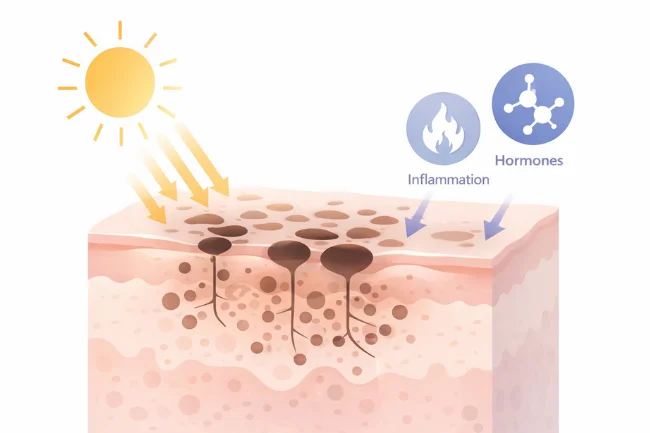
Visual representation of how inflammation and UV exposure contribute to hyperpigmentation in the skin
Hyperpigmentation isn’t just a surface issue—it’s often driven by inflammation, hormones, and UV exposure. This is where Tranexamic Acid Skincare truly shines.
Targets Melasma More Effectively
Melasma is notoriously difficult to treat because it’s influenced by hormonal changes and sun exposure. Multiple clinical studies have shown that topical and oral tranexamic acid can significantly reduce melasma severity when used consistently.
According to research published in The Journal of Dermatological Treatment, tranexamic acid helps suppress UV-induced plasmin activity in keratinocytes, reducing melanocyte stimulation.
Reduces Post-Inflammatory Hyperpigmentation (PIH)
If acne leaves behind dark marks long after breakouts heal, tranexamic acid can help. By calming inflammation early, it minimizes the skin’s overproduction of pigment during healing.
Tranexamic Acid vs Other Brightening Ingredients
Not all brightening ingredients work the same way. Understanding how tranexamic acid compares helps you build a smarter routine.
Comparison Table: Brightening Ingredients
Ingredient
Primary Function
Best For
Irritation Risk
Tranexamic Acid
Reduces inflammation-induced pigmentation
Melasma, PIH, uneven tone
Low
Vitamin C
Antioxidant, brightening
Dull skin, sun damage
Medium
Niacinamide
Barrier repair, tone balancing
Redness, enlarged pores
Low
Alpha Arbutin
Tyrosinase inhibition
Dark spots
Low–Medium
Kojic Acid
Pigment suppression
Hyperpigmentation
Medium–High
Tip: Always pair brightening ingredients with broad-spectrum sunscreen to protect results.
Tranexamic Acid Skincare stands out because it targets pigmentation at a signaling level, not just surface pigment.
Who Should Use Tranexamic Acid Skincare?
Tranexamic acid is suitable for most skin types, but it’s especially beneficial if you have:
Melasma or hormone-related pigmentation
Post-acne dark spots
Sensitive skin that reacts to exfoliating acids
Uneven skin tone without active breakouts
Is It Safe for Sensitive Skin?
Yes. One of the biggest advantages of tranexamic acid is its low irritation profile. Dermatologists often recommend it for patients who can’t tolerate retinoids or strong chemical exfoliants.
How to Use Tranexamic Acid in Your Skincare Routine
Step-by-Step Placement in a Routine
Tranexamic acid is typically found in serums, essences, or emulsions.
Morning Routine
Gentle cleanser
Tranexamic acid serum
Moisturizer
Broad-spectrum sunscreen (non-negotiable)
Evening Routine
Cleanser
Hydrating toner (optional)
Tranexamic acid treatment
Moisturizer or barrier cream
How Often Should You Use It?
Most formulations are designed for daily use, once or twice a day. Always follow product instructions and patch test first.
Best Ingredient Pairings With Tranexamic Acid
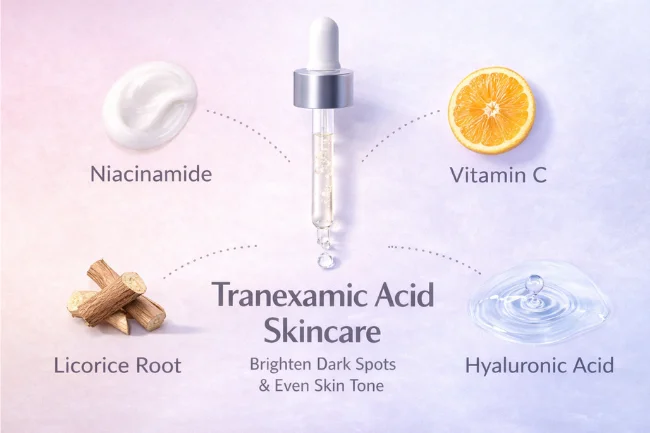
Key ingredient combinations that enhance the effectiveness of tranexamic acid skincare for brighter, balanced skin
Tranexamic acid works best when combined with supportive ingredients.
Effective Combinations
Niacinamide: Enhances barrier repair and brightening
Vitamin C: Improves radiance and antioxidant protection
Licorice Root Extract: Adds soothing and pigment-reducing benefits, often found in Well Health Organic formulations and natural wellness guides.
Hyaluronic Acid: Prevents dryness and improves comfort
Ingredients to Be Cautious With
Strong AHAs/BHAs if you have sensitive skin
High-strength retinoids without proper barrier support
What Results Can You Expect?
Tranexamic Acid Skincare is not an overnight fix, but it delivers steady, visible improvement.
Typical Timeline
2–4 weeks: Improved skin clarity and reduced redness
6–8 weeks: Noticeable fading of dark spots
12 weeks: More even overall skin tone
Consistency, sun protection, and patience are key.
Scientific Backing and Credible Sources
Journal of Dermatological Treatment – Clinical studies on tranexamic acid for melasma – https://www.tandfonline.com/doi/full/10.1080/09546634.2024.2361106
The British Journal of Dermatology – Mechanisms of pigment regulation – https://academic.oup.com/bjd
American Academy of Dermatology (AAD) – Hyperpigmentation and melasma treatment guidelines – https://www.aad.org/public/diseases/a-z/melasma-treatment
These sources consistently support tranexamic acid as a safe and effective option for pigment correction.
Common Myths About Tranexamic Acid Skincare
“It’s Just Another Acid”
Despite the name, tranexamic acid does not exfoliate like glycolic or salicylic acid.
“It Works Instantly”
Like most pigment-correcting ingredients, results take time and consistency.
FAQs About Tranexamic Acid Skincare
What does tranexamic acid do for skin?
Tranexamic acid reduces discoloration by calming inflammation and interrupting melanin signaling pathways, helping fade dark spots and melasma.
Can I use tranexamic acid every day?
Yes, most topical formulations are designed for daily use and are gentle enough for long-term application.
Is tranexamic acid safe during pregnancy?
Topical use is generally considered low risk, but pregnant or breastfeeding individuals should consult a healthcare professional before use.
Does tranexamic acid work on acne scars?
It works best on post-inflammatory hyperpigmentation rather than textured scars. It can help fade dark marks left behind by acne.
Can tranexamic acid replace vitamin C?
They serve different purposes. Tranexamic acid targets pigmentation pathways, while vitamin C focuses on antioxidant protection and brightness. They often work best together.
Final Thoughts: Is Tranexamic Acid Worth Adding to Your Routine?
If uneven skin tone or stubborn dark spots are holding your skin back, Tranexamic Acid Skincare is absolutely worth considering. It’s gentle, science-backed, and effective without compromising your skin barrier.
Next step: Look for a well-formulated tranexamic acid serum with complementary ingredients like niacinamide and always pair it with daily sunscreen for best results. Consistency will do the rest.
Ready to Fade Stubborn Dark Spots?
Understanding the science of Tranexamic Acid Skincare is the first step; finding the right formula is the second. Because TXA works best when supported by a “team” of ingredients, we recommend looking for a serum that balances potency with skin barrier protection.
Your Action Plan:
Check the Concentration: Look for a serum containing 2-5% Tranexamic Acid for optimal results without irritation.
Verify the Partners: Ensure the formula includes Niacinamide or Vitamin C to tackle pigmentation from multiple angles.
The Sunscreen Rule: Remember, no brightening serum can outrun sun damage. Apply a broad-spectrum SPF 30+ every single morning to protect your progress.
Irfan Ali is the founder of Wellbeing Junction, where he specializes in synthesizing peer-reviewed research into actionable lifestyle guides. By bridging the gap between scientific data and daily habits, Irfan Ali provides evidence-based strategies for skin health, nutrition, and personal growth. Follow his work for trusted, human-first wellness advice.