Different types of walking aids helping seniors stay mobile, safe, and independent.
Walking aids play a crucial role in enhancing mobility and independence for individuals with various physical challenges, either due to age, injury, or medical conditions. These devices come in different kinds, each designed to accommodate specific needs and circumstances. In this blog, we will explore the various types of walking aids, their uses, and essential features to consider when choosing the right one.
Walking aids are primarily used to provide support, stability, and safety. Here are some common situations in which these mobility devices are beneficial:
HealthIssues: Medical conditions like cerebral palsy, diabetic ulcers, and visual impairments can impede mobility. With mobility aids, affected individuals can maintain their independence and ensure safety while navigating their environment.
Injury or Post-Surgery Recovery: Sports injuries, such as strains and sprains, and surgeries, particularly those related to the legs, feet, or back, may require the use of walking aids during recovery. Using them can prevent strain and promote proper healing of tissues and bones.
Balance Issues: Older adults often experience difficulties maintaining balance due to various factors, including the use of certain medications or a decline in physical health. The right walking device can help counteract these issues, reducing the risk of falls.
Chronic Pain: Individuals who suffer from conditions, such as arthritis, may find walking challenging. Using walking aids can alleviate pressure on painful joints and enhance mobility.
Types of Walking Aids
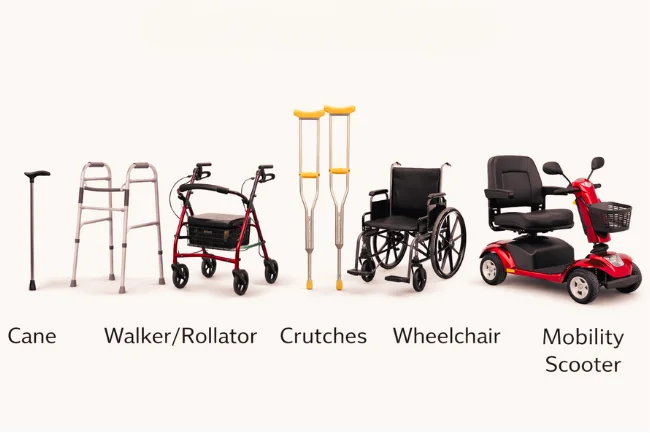
Different types of walking aids designed to support various mobility needs
There are several types of walking aids, each with different features and functionality suited for different needs and levels of mobility:
Canes: Canes are among the simplest and most common walking aids. They provide additional support and stability to individuals with minor balance issues or leg weakness. Canes can come with wider bases, different handles, and foldable options.
Walkers and Rollators: Walkers offer a broader base of support than canes and are typically used by individuals who need significant stability but can still bear weight on their legs. An option equipped with wheels and a seat, called a rollator, is also available. It’s particularly beneficial for those who tire easily, as it combines mobility assistance with convenience.
Crutches: Commonly used during the recovery phase after surgery or injury, crutches are an important part of walking aids, allowing individuals to shift weight off an injured leg while maintaining mobility. Depending on your needs, you may choose from underarm, forearm, or platform crutches.
Wheelchairs: Wheelchairs are an effective solution for individuals who are unable to walk or require long-term mobility assistance. Depending on the user’s level of independence and strength, users can choose from manual or electric options.
Mobility Scooters: Similar to wheelchairs, mobility scooters are designed for individuals who have more significant mobility limitations. These walking devices provide powered assistance, enabling users to travel longer distances with ease.
Features to Consider
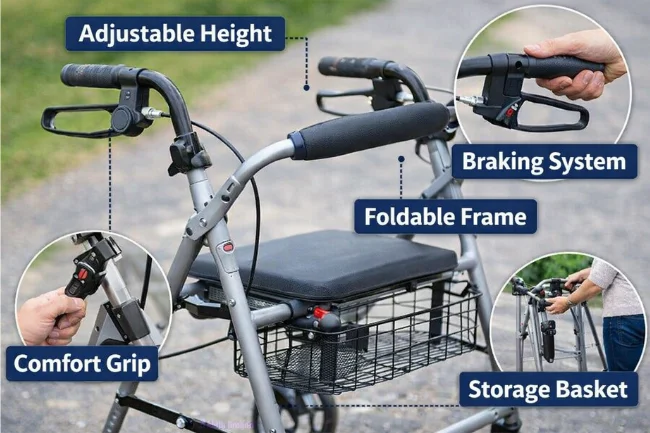
Key features to consider when choosing a walking aid, including height adjustment, brakes, grip comfort, and storage.
Choosing the right walking aid involves considering essential features to ensure it meets your needs. Here are some of them:
Weight Capacity: Every walking aid has a weight limit. Always ensure the selected device can safely support the user’s weight, thereby avoiding accidents or equipment failure.
Height Adjustment: Many walking aids are available with adjustable heights, allowing for personalized support. Ensuring that the device is adjusted to suit the user’s height and comfort allows for an ergonomic posture while walking.
Portability: If you frequently travel or need your walking aid to be easily stored, consider models that are lightweight and foldable. This can make transportation and storage much simpler.
Comfort and Grip: The handle design of your walking aid significantly impacts comfort and control. Consider ergonomic and textured grips for improved traction and control, which can help reduce slippage and strain on the hands.
Braking System: For rollators and walkers with wheels, having effective hand brakes is essential. They should be easy to engage to prevent the device from rolling away when the user is seated or needs to pause, ensuring safety.
Additional Features: Some walking aids come with extra features, such as baskets, trays, or storage compartments, making it easier to carry personal items along. These can enhance overall usability, especially in daily activities.
Walking aids are invaluable tools for enhancing mobility, safety, and independence in daily life. By learning about its uses, different types, and essential considerations when choosing one for your needs, you can make more informed decisions. Contact a mobility equipment supplier near you to learn more about your options.
Grace Holloway is a Senior Care and Healthy Aging Content Researcher at Wellbeing Junction with 6+ years of experience researching and writing about healthy aging, senior wellness, caregiving, mobility, independent living, and everyday quality of life for older adults. She focuses on creating clear, practical, and evidence-informed content that helps seniors and caregivers make more informed wellness and lifestyle decisions.
Grace Holloway is a Senior Care and Healthy Aging Content Researcher at Wellbeing Junction with 6+ years of experience researching and writing about healthy aging, senior wellness, caregiving, mobility, independent living, and everyday quality of life for older adults. She focuses on creating clear, practical, and evidence-informed content that helps seniors and caregivers make more informed wellness and lifestyle decisions.